Rainwater harvesting is an important water management practice for residential, commercial, industrial and infrastructure developments. It involves collecting rainwater from suitable catchment surfaces, directing it through a collection system, and storing it for appropriate uses. The selection of a suitable storage tank plays a significant role in maintaining water availability, reducing dependence on conventional water sources and supporting efficient water resource management.
Steel Rainwater Tanks are used in rainwater harvesting systems where durable construction, planned storage capacity and efficient installation are important considerations. These tanks are designed to collect and store rainwater for applications such as landscape irrigation, industrial utility requirements, cleaning operations, and other non-potable uses, depending on the water treatment process.
Steel storage systems are available in different configurations, capacities and construction specifications. Their suitability depends on factors such as rainfall patterns, catchment area, storage requirements, site conditions, water quality and structural design.
AVM Prefabricated Modular Tanks LLP operates in the prefabricated modular tank segment, which is relevant to planned water storage requirements across different sectors. Understanding tank materials, structural components, installation requirements and maintenance considerations helps project planners select an appropriate rainwater storage solution.
What Are Steel Rainwater Tanks?
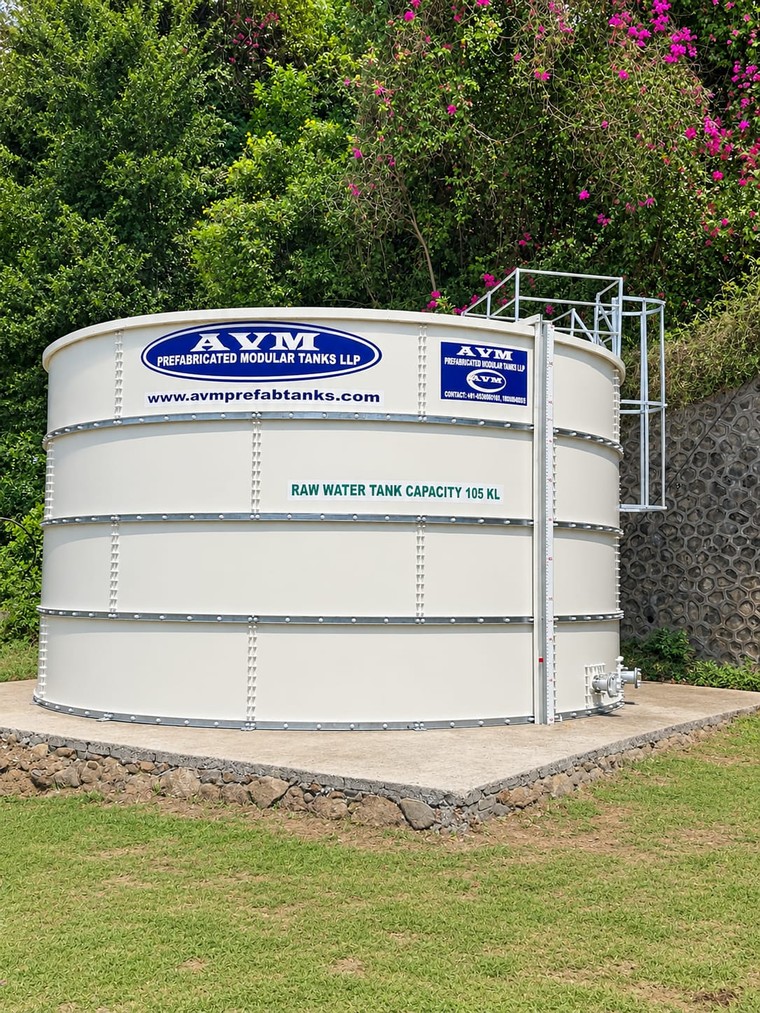
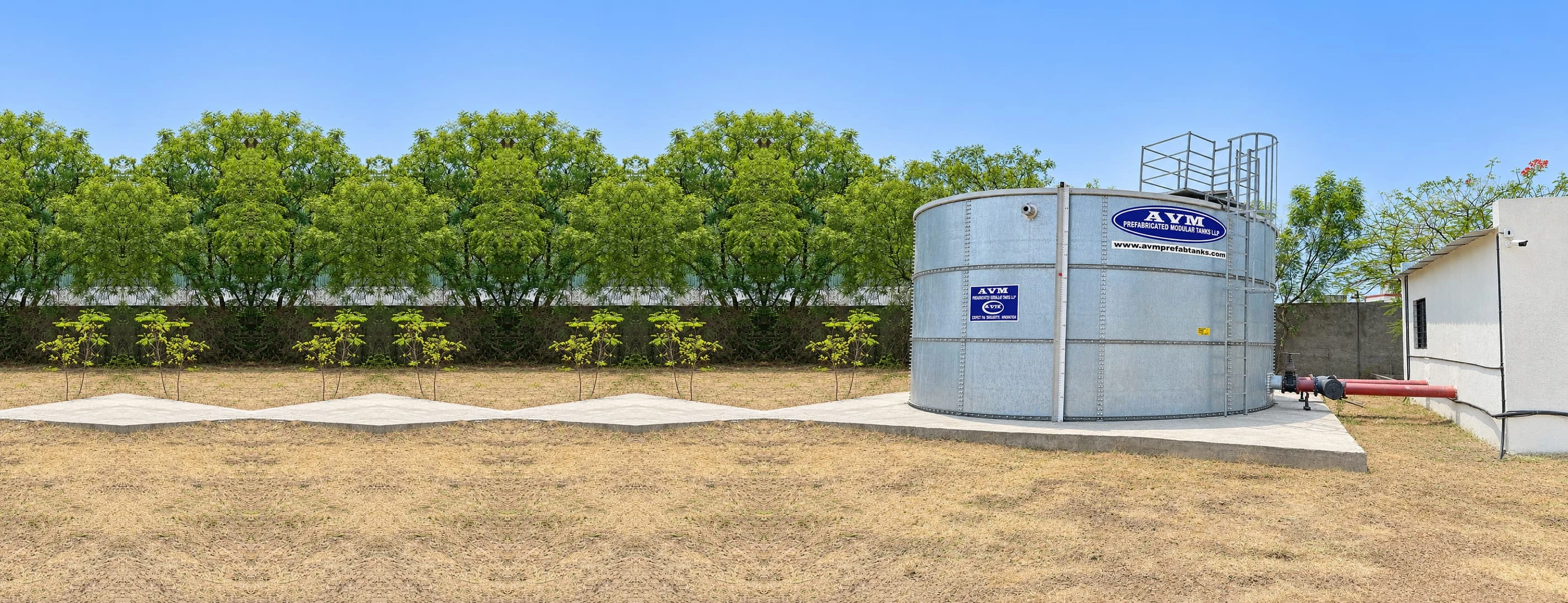
Steel Rainwater Tanks are storage structures manufactured using steel components to collect and retain rainwater harvested from rooftops, industrial sheds, paved surfaces or other designated catchment areas.
These tanks can be designed using different steel construction methods, including bolted steel panels and other engineered configurations. Depending on the application, the internal surface may require a suitable protective lining or coating to minimise corrosion and maintain water quality.
The collected rainwater generally passes through a series of collection and filtration components before entering the tank. These components may include:
- Roof catchment or collection surfaces
- Rainwater gutters and downpipes
- First-flush diversion systems
- Leaf screens and debris filters
- Inlet arrangements
- Storage tank structure
- Overflow and drainage connections
- Outlet and distribution systems
The tank capacity and configuration should be determined according to the expected volume of collected rainwater, intended usage and available installation space.
Construction and Structural Components of Steel Rainwater Tanks
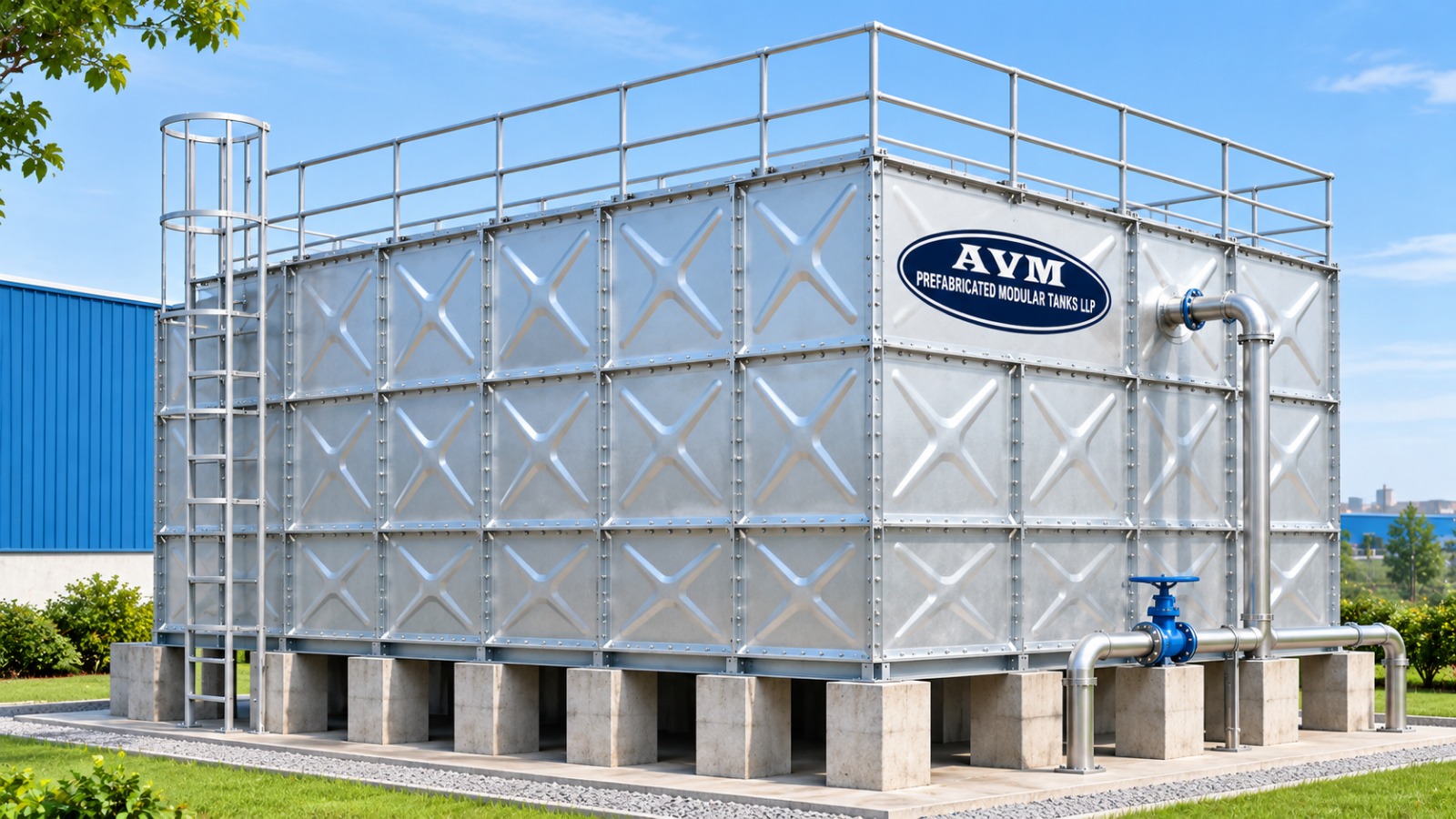
The construction of steel rainwater storage systems involves selecting suitable materials, structural components and protective arrangements according to the intended application. Steel panels form the main tank body, while the supporting framework helps maintain stability under stored water pressure. In prefabricated modular systems, individual panels are manufactured to specified dimensions and assembled at the project site. Steel grade, panel thickness, reinforcement and connection details should be determined through appropriate engineering calculations.
Corrosion protection is another important part of tank construction because steel surfaces are exposed to moisture and environmental conditions. Depending on the tank design, protection may include galvanised components, internal lining systems, external coatings and suitable sealing arrangements. Internal lining materials should be compatible with the stored water. If harvested rainwater is intended for drinking, all water-contact surfaces and associated components must meet applicable potable-water requirements.
Bolted connections, fasteners and gaskets help join individual panels and maintain leak-resistant construction in modular tanks. Proper assembly procedures and sealing specifications are essential for reliable performance. Roofs or protective covers help limit the entry of dust, leaves, insects and other contaminants. Access manholes, inspection openings, ventilation provisions and maintenance access points should also be incorporated according to the tank configuration and operational requirements.
How Does a Steel Rainwater Harvesting System Work?
A steel rainwater harvesting system collects rainfall from designated catchment surfaces and transfers it to a storage tank through a series of collection, filtration and conveyance components. The process generally begins when rainwater falls on rooftops, warehouses or industrial sheds. Gutters and downpipes channel the collected water towards a filtration arrangement, while a first-flush diverter removes the initial runoff that may contain accumulated dust, leaves and surface contaminants.
After the initial diversion, rainwater passes through suitable filters that remove leaves, suspended particles and other physical impurities. The filtered water then enters Steel Rainwater Tanks through a designated inlet connection for storage. The filtration system should be selected according to the catchment surface, expected water quality and intended application.
Stored rainwater can be supplied through outlet connections for suitable uses such as gardening, irrigation, cleaning and other approved non-potable applications. If the water is intended for drinking, appropriate treatment and verification of potable water quality are necessary. An overflow arrangement should also be provided to safely direct excess water towards a designated drainage or groundwater recharge system.
Major Applications of Steel Rainwater Tanks
Steel rainwater storage systems support water conservation across commercial, industrial, residential, agricultural and institutional sectors. Their capacity and configuration depend on the volume of rainfall collected, available space and the intended use of stored water. Water Storage Tanks Commercial installations can be integrated into office complexes, shopping centres, hotels, warehouses and institutional buildings to collect rooftop runoff for landscaping, cleaning, sanitation and other suitable non-potable applications.
Industrial facilities use steel rainwater tanks to collect and store water for equipment washing, cleaning, cooling and general utility operations. These systems can form part of an industrial water management plan, provided the stored water meets the quality requirements of the intended process. Residential societies and apartment complexes can also use rooftop rainwater harvesting systems to maintain additional water reserves for gardening, outdoor cleaning and other approved non-potable purposes.
Agricultural facilities can use stored rainwater as a supplementary source for irrigation, livestock-related activities and other suitable farm operations. Tank capacity should account for local rainfall patterns, collection efficiency, seasonal demand and available storage space. Schools, hospitals, public buildings and infrastructure projects may also incorporate rainwater harvesting systems into their water conservation strategies, with suitable filtration, treatment and overflow arrangements based on project requirements.
Important Design Considerations for Steel Rainwater Tanks
The design of Steel Rainwater Tanks requires careful evaluation of storage capacity, material specifications, foundation conditions and water quality. Tank capacity can be estimated using rainfall depth, catchment area and collection efficiency. A preliminary calculation uses the formula:
Where V represents the estimated rainwater collection volume, R is rainfall depth in metres, A is the catchment area in square metres and C is the runoff coefficient. For example, a rooftop measuring 1,000 square metres receiving 0.8 metres of annual rainfall, with a runoff coefficient of 0.8, could theoretically collect 640 cubic metres (640,000 litres) of rainwater annually. Actual collection may be lower due to filtration losses, evaporation, seasonal rainfall variations and storage limitations.
Steel grade and panel thickness should be selected according to tank height, diameter, hydrostatic pressure, panel arrangement and environmental loads. Foundation design must also consider the total operating weight, soil bearing capacity and potential settlement. Proper engineering calculations and site assessment help maintain structural stability and reduce stress on tank panels and connections during operation.
Water quality and connection arrangements are equally important during tank planning. Filtration requirements should be determined according to the catchment surface, surrounding conditions and intended use of the collected rainwater. Potable applications require appropriate treatment and water quality testing, as untreated rainwater is not automatically safe for drinking. Inlet, outlet and overflow connections should be positioned to support effective water movement, safe drainage and convenient maintenance while preventing excess water from accumulating around the tank foundation.
Applications of Steel Rainwater Tanks
Steel Rainwater Tanks are used across residential, commercial, industrial, agricultural and institutional sectors to collect and store rainwater for suitable applications. Residential buildings can use harvested rainwater for gardening, outdoor cleaning, vehicle washing and other non-potable household requirements. Properly planned storage arrangements help residents make use of seasonal rainfall while reducing dependence on other water sources.
Commercial properties such as shopping complexes, office buildings, hotels and educational institutions can incorporate rainwater storage systems into their water conservation plans. Industrial facilities may use collected rainwater for equipment washing, selected utility operations, landscaping and other processes where the stored water meets the required quality specifications.
Agricultural installations can support irrigation, livestock-related requirements and other farm activities, depending on water quality and seasonal demand. Hospitals, schools, public buildings and infrastructure projects may also include rainwater harvesting systems as part of their water management strategies. Tank capacity, filtration arrangements and storage design should be selected according to the specific requirements of each application.
Water Storage Tanks Commercial Requirements and Selection Criteria
Commercial developments require rainwater storage systems that can manage varying water demand while fitting available installation space and operational conditions. Water Storage Tanks Commercial applications are commonly found in office complexes, shopping centres, warehouses, manufacturing facilities and institutional buildings. The selection process should begin with an assessment of daily water requirements, intended usage and local rainfall availability.
Catchment area and storage capacity are equally important when planning a commercial rainwater harvesting system. Engineers should evaluate the effective rooftop collection area, seasonal rainfall variations and expected collection efficiency to determine a suitable tank volume. Available installation space, foundation dimensions and transportation access should also be checked before finalising the tank configuration. Filtration and treatment arrangements must be selected according to the intended use of the collected water.
Maintenance accessibility should also be included in the planning process. Sufficient space for inspection, internal cleaning and component repairs helps support efficient tank operation. Commercial tank specifications should be finalised through coordination between project engineers, architects and water management consultants to ensure that the selected system meets the project's technical and operational requirements.
Water Hauling Tanks and Their Differences from Stationary Rainwater Tanks
Water Hauling Tanks are designed to transport water between different locations and are commonly used at construction sites, agricultural properties, remote work areas and locations without access to fixed water distribution networks. Their construction must account for movement-related forces, transportation conditions and suitable vehicle or trailer mounting arrangements. These tanks are selected according to transportation capacity, water requirements and operating conditions.
In comparison, Steel Rainwater Tanks are generally stationary structures designed to collect and store harvested rainwater for future use. They are installed on prepared foundations and connected to catchment, filtration, inlet, outlet and overflow systems. Their engineering design focuses on storage capacity, hydrostatic pressure, structural stability, corrosion protection and long-term water management.
Steel rainwater storage systems provide an engineered approach to collecting and retaining rainwater across residential, commercial, industrial and institutional applications. Their performance depends on appropriate material selection, structural design, corrosion protection, foundation preparation and water quality management.
The selection process should consider rainfall availability, catchment area, storage demand, tank configuration and installation conditions. Proper filtration and treatment are particularly important when stored rainwater is intended for potable applications.
For AVM Prefabricated Modular Tanks LLP, understanding these technical requirements provides a relevant foundation for evaluating modular water storage solutions and project-specific tank configurations. A systematic approach to design, installation and maintenance supports reliable water storage and long-term water resource management.
Not sure which tank fits your site? Share your application, daily demand and site size — our engineers will size the tank and send a layout with the quote. Talk to an engineer →Steel Rainwater Tank Requirements at AVM Prefabricated Modular Tanks LLP
AVM Prefabricated Modular Tanks LLP operates in the prefabricated modular tank industry, where storage capacity, structural configuration, material selection and installation requirements are important considerations.
For projects involving Steel Rainwater Tanks, technical evaluation should begin with an understanding of the intended application, expected storage volume, site dimensions and environmental conditions.
The following project parameters are relevant during the planning stage:
- Required storage capacity in litres or cubic metres.
- Proposed tank height and diameter.
- Steel grade and panel thickness.
- Internal lining and external coating requirements.
- Foundation and installation conditions.
- Inlet, outlet and overflow specifications.
- Water quality and intended usage.
- Inspection and maintenance accessibility.
These details help establish an appropriate technical specification for the proposed storage system.
A properly planned modular tank installation should address structural stability, corrosion protection, water quality and operational requirements throughout its intended service period.
Frequently Asked Questions
The capacity of metal rainwater tanks depends on their internal shape and dimensions. For a cylindrical tank built in the grain silo style, usable capacity equals π × (inside diameter ÷ 2)² × usable water depth. Measure that depth from the lowest level the outlet or pump can draw from up to the overflow. For example, a tank with a 3-meter inside diameter and 2 meters of usable depth provides about 14,100 liters of water.
high-quality commercial water storage tanks help businesses, farms, and industrial facilities efficiently manage water consumption by capturing, storing, and distributing water on-demand. Instead of relying solely on municipal water, water storage tanks provide a buffer that reduces waste, lowers costs, and ensures a reliable water source for operations, irrigation, and emergency reserves.
Steel potable water tanks are designed to provide safe, sanitary, and durable drinking water storage. They are typically fabricated from 304 or 316 stainless steel, selected for its corrosion resistance, strength, and long service life. Tanks are commonly available in vertical or cistern configurations, including 90-gallon vertical (Texas Metal Tanks TM-MT90S-WS) and 200-gallon vertical (Texas Metal Tanks TM-MT200S-WS) models, with a 140-gallon vertical (Texas Metal Tanks TM-MT140G-WS) option for different capacity requirements.
A water hauling system is a specialized transportation and delivery solution designed to transport water from one location to another. These systems are commonly used in rural areas, construction sites, agricultural operations, disaster relief zones, and any location where a direct connection to a municipal water supply is unavailable or insufficient. Water hauling systems play a vital role in ensuring that water can be delivered efficiently, safely, and on-demand to wherever it is needed most.
A water hauling system typically consists of a tank, a pump, a delivery mechanism, and a transport vehicle such as a truck or trailer. The tank is the core component of the system, as it holds the water during transit. Many professionals and businesses rely on truck water hauling tanks from 50 to 4500 gallons, which are available in a wide range of sizes to accommodate different hauling needs and vehicle configurations. These tanks are engineered to meet strict safety and quality standards, ensuring that the water remains clean and uncontaminated throughout the transportation process.