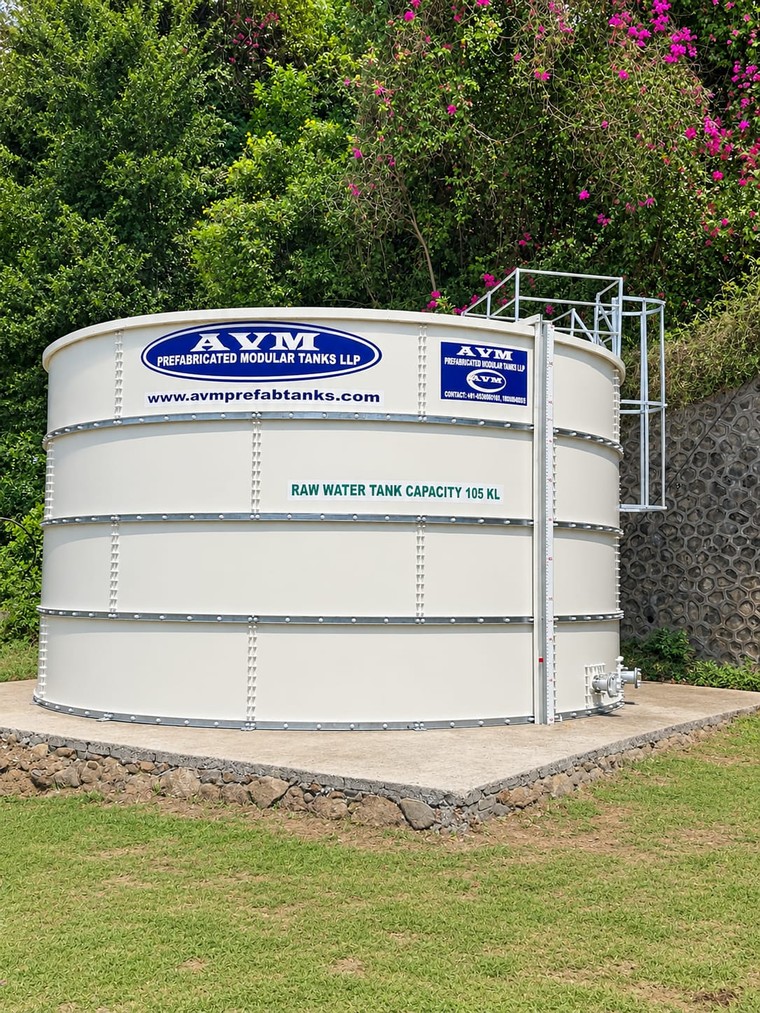
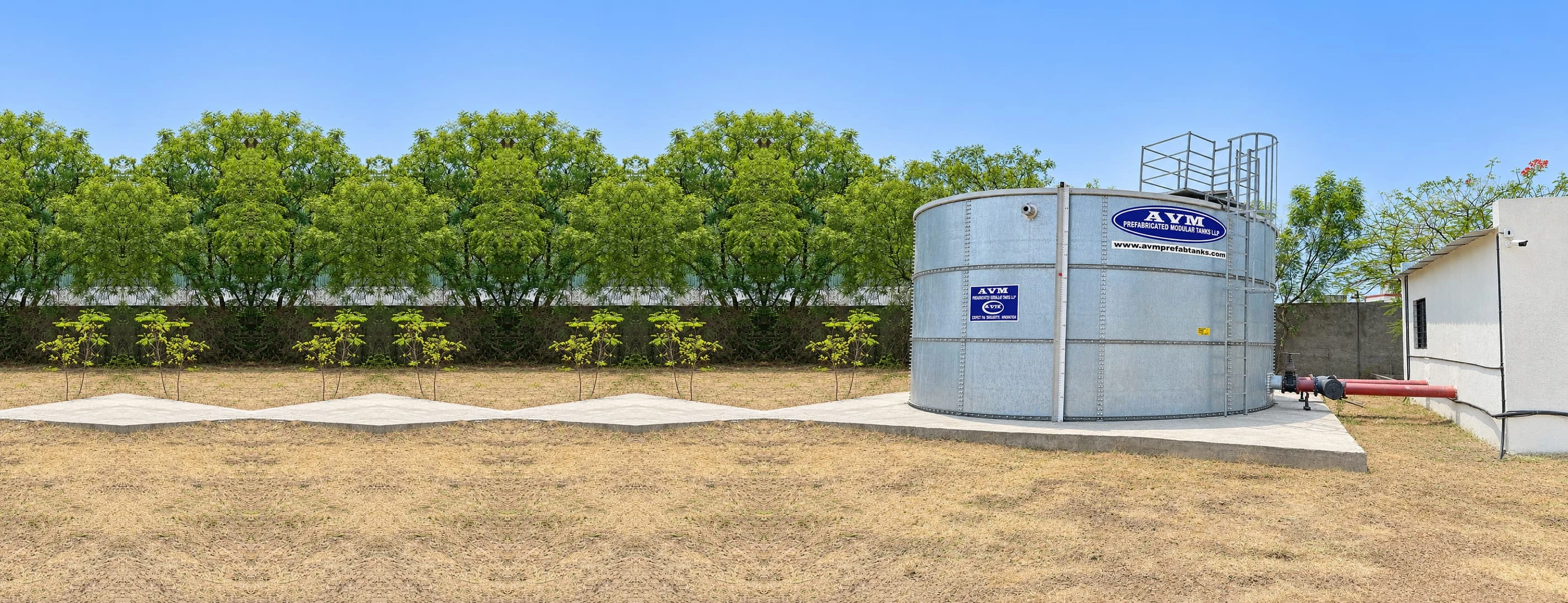
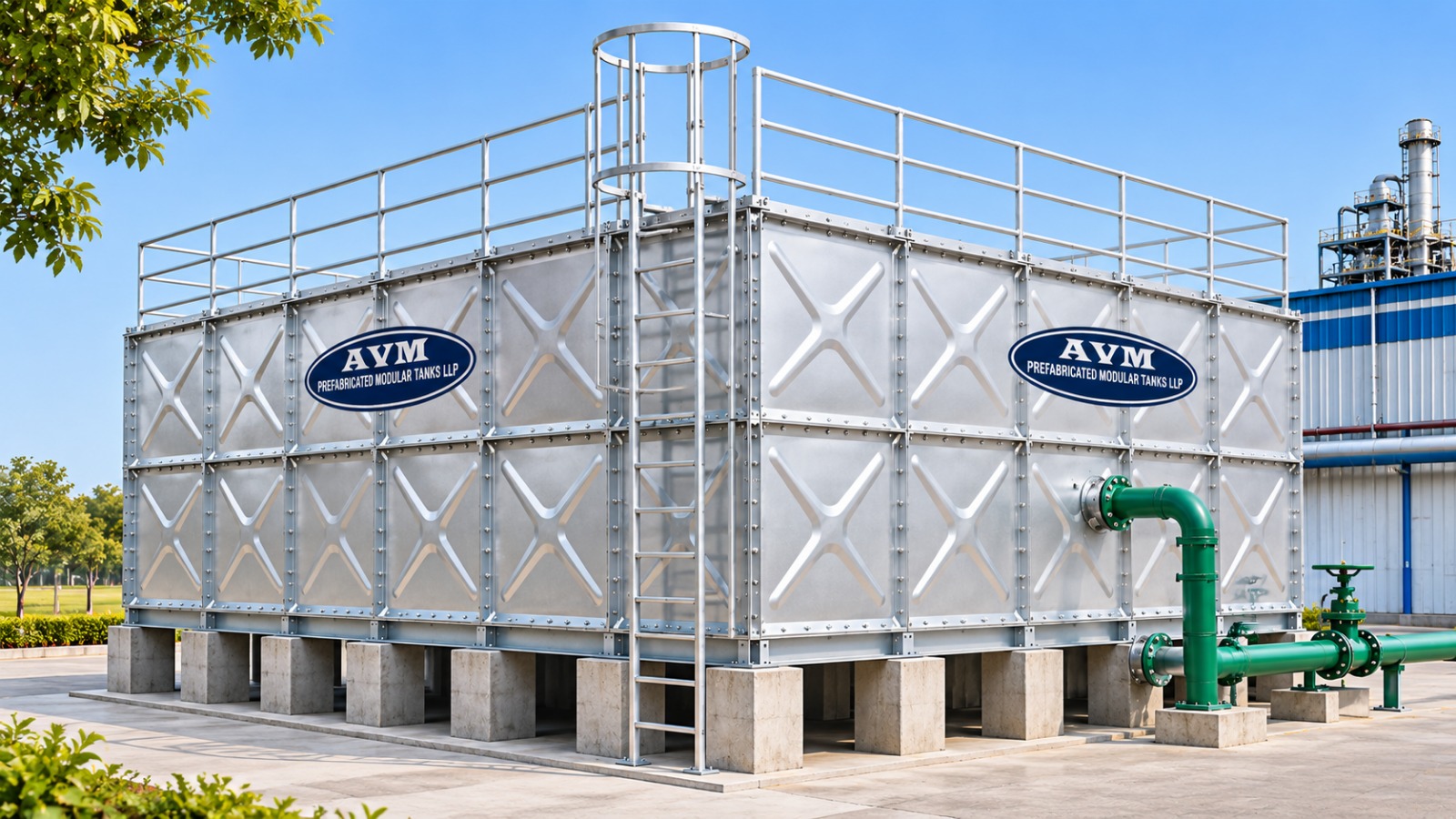
Raw water storage is an important part of water management infrastructure across industrial facilities, manufacturing plants, commercial developments and municipal water supply systems. Before water undergoes treatment or distribution, it often requires temporary or intermediate storage to maintain an adequate supply for operational requirements. The selection of an appropriate storage system depends on water quality, storage capacity, environmental conditions, structural design and the intended treatment process.
Raw Water Storage Tanks are specifically designed to store untreated water collected from sources such as rivers, lakes, reservoirs, borewells and other approved water supply systems. These tanks provide a controlled storage arrangement before water is transferred for filtration, chemical treatment, purification or industrial use.
Unlike treated water storage systems, raw water tanks may receive water containing suspended solids, sediments, organic matter and naturally occurring minerals. Therefore, tank material selection, internal surface protection, sediment management and maintenance planning are important considerations during system design.
AVM Prefabricated Modular Tanks LLP operates in the prefabricated modular tank segment, where storage capacity, material specifications, structural performance and installation requirements are important aspects of project evaluation.
This article explains the construction, types, applications, design considerations, material selection, installation procedures and maintenance requirements associated with raw water storage systems.
Industrial Applications of Raw Water Storage Tanks
Raw water storage tanks play an important role in industries that depend on a steady supply of untreated water for daily operations. Manufacturing and processing facilities use stored water for equipment cooling, cleaning, production activities and utility services. Maintaining an adequate reserve helps manage variations in water demand and ensures that essential operations can continue without frequent interruptions in supply.
Water treatment plants and power generation facilities also rely on raw water storage to support their operating requirements. Treatment plants use storage tanks to regulate the incoming water supply before it enters filtration, sedimentation and other treatment stages. Similarly, power plants maintain raw water reserves for cooling systems and utility applications, providing a buffer between the source of water and the plant's treatment or distribution network.
Chemical and pharmaceutical industries use raw water as an input for further treatment and process-related activities, making water quality and compatibility important considerations during storage planning. Large infrastructure projects, industrial parks, commercial complexes and institutional developments may also require dedicated storage capacity to support treatment facilities and general utility operations. The tank capacity, material and configuration should be selected according to the site's water demand and operational requirements.
Key Design Considerations for Industrial Raw Water Storage Tanks
The design of Industrial Raw Water Storage Tanks should begin with a clear understanding of the facility's water consumption and operational requirements. Capacity planning must account for average daily demand, peak consumption, incoming water availability, replenishment frequency and the reserve required during supply interruptions. Future expansion, tank cleaning and maintenance requirements should also be considered before finalising the storage volume. Selecting the right capacity helps maintain a reliable water supply without creating unnecessary storage or installation costs.
Material selection and structural design are equally important for achieving dependable tank performance and long-term service life. The selected material should be suitable for the physical and chemical characteristics of the stored water, environmental exposure and expected operating conditions. For prefabricated modular tanks, panel strength, protective coatings, jointing arrangements and sealing components require careful evaluation. Structural calculations should also consider hydrostatic pressure, wind loads, seismic forces, foundation bearing capacity and settlement conditions. Underground installations may require additional assessment of soil pressure and groundwater conditions to ensure the tank remains stable.
Inlet, outlet, overflow and drainage arrangements should be planned according to the required water flow and distribution system. Properly positioned connections support efficient water movement, while suitable drainage provisions help remove accumulated sediment and residual water during cleaning. Overflow arrangements should safely manage excess water when the tank reaches its maximum operating level. The design should also provide convenient inspection and maintenance access through suitable openings, ladders, platforms and safety arrangements wherever required. These provisions make routine inspections easier and help maintain the condition of tank panels, joints, pipelines and other components throughout the operating life of the storage system.
How to Calculate the Required Raw Water Tank Capacity
Calculating the required capacity of a raw water storage tank is an important step in planning an efficient industrial water storage system. The estimate should be based on the facility's daily water consumption and the number of days for which water must remain available without replenishment. A basic preliminary calculation can be made using the following formula:
For example, if an industrial facility consumes approximately 100,000 litres of raw water per day and requires a two-day storage reserve, the calculation would be:
- Daily water demand: 100,000 litres
- Required storage period: 2 days
- Total capacity: 100,000 × 2
- Required storage capacity: 200,000 litres
This calculation provides an initial estimate rather than the final tank size. The design should also consider usable water volume, minimum operating levels, freeboard, sediment allowance, water replenishment rate and specific process requirements. For larger facilities, engineers may evaluate whether a single tank or multiple compartments would be more suitable. Multiple compartments can provide greater operational flexibility by allowing one section to be inspected or cleaned while other sections continue supplying water, provided the tank system is designed to support this arrangement.
Installation Requirements for Raw Water Storage Tanks
Proper installation is essential for maintaining the structural strength, stability and operating reliability of Raw Water Storage Tanks. Before starting the work, the installation site should be evaluated for soil conditions, ground level, drainage arrangements, accessibility and available space. The selected location must provide sufficient clearance for tank assembly, pipeline connections and future maintenance activities. Foundation preparation should follow the approved engineering drawings and tank specifications. It must be designed to withstand the combined weight of the tank structure and its maximum stored water volume. The foundation surface should be properly levelled, and its bearing capacity and settlement conditions should be checked before installation begins.
For prefabricated modular tanks, panel assembly should be carried out according to the manufacturer's recommended procedure and approved structural drawings. Each panel, support member and connection component must be positioned correctly to maintain the intended tank configuration. Bolts, fasteners, gaskets, sealants and jointing materials should meet the specified requirements to minimise the possibility of leakage. Once the main structure is assembled, inlet, outlet, overflow and drain pipelines should be connected at their designated positions. Pumps, valves, level indicators and other accessories must also be installed according to the planned water supply and distribution arrangement. Proper alignment of pipeline connections helps avoid unnecessary stress on the tank structure.
After completing the assembly and connection work, the tank should undergo a detailed inspection before being commissioned for regular use. Water-filling and leakage tests should be performed in accordance with the approved commissioning procedure to identify seepage or connection-related issues. During testing, the foundation, panel joints, fasteners, sealing arrangements and pipeline interfaces should be monitored for any signs of movement, deformation or leakage. The overflow and drainage systems should also be checked to confirm that they function as intended. Any identified defects must be corrected before the tank is put into operation. Maintaining installation records, inspection reports and testing documentation helps support future maintenance and ensures that the storage system continues to operate reliably.
Raw Water Storage Tanks are an important part of industrial water management and treatment infrastructure. They provide an intermediate storage arrangement for untreated water before it enters filtration, purification, processing or distribution systems.
Their performance depends on several engineering factors, including storage capacity, tank dimensions, construction material, protective coating, structural design, foundation preparation and maintenance practices.
Understanding the relationship between a Raw Water Tank, Industrial Water Storage Tanks and Industrial Liquid Storage Tanks is essential when selecting an appropriate storage system. Each application has different requirements related to water quality, material compatibility, structural loading and operational conditions.
AVM Prefabricated Modular Tanks LLP operates in the prefabricated modular tank segment, where these considerations form an important part of evaluating storage infrastructure requirements. The final tank configuration should always be determined through project-specific engineering assessment, approved technical specifications and applicable standards.
Not sure which tank fits your site? Share your application, daily demand and site size — our engineers will size the tank and send a layout with the quote. Talk to an engineer →Important Factors Before Selecting Raw Water Storage Tanks
Selecting the right raw water storage system requires careful evaluation of the project's water requirements, site conditions and expected operating environment. The water source should be identified first, whether it is groundwater, surface water, municipal supply or another source, as its characteristics can influence tank material and maintenance requirements. Water quality parameters such as pH, suspended solids and dissolved minerals should also be assessed before selecting a suitable storage solution. Storage capacity must be calculated according to daily consumption, supply availability, replenishment frequency and the required reserve period.
Tank material and protective coating specifications should be selected based on structural strength, environmental exposure and compatibility with the stored water. Steel, concrete, plastic and prefabricated modular systems may be considered depending on project requirements. Installation conditions also need attention, including foundation capacity, soil characteristics, site accessibility, available space and the movement of equipment during installation. These details help determine whether the proposed tank configuration is suitable for the location and can be installed safely.
Maintenance planning should be considered before the tank is commissioned rather than treated as a later requirement. Project teams should establish suitable schedules for inspecting panels, joints, coatings, pipelines and structural connections. Provisions for internal cleaning, sediment removal, water quality monitoring and timely repairs should also be included in the operating plan. Evaluating these requirements during the selection stage helps identify a storage solution that meets present water demand while supporting dependable operation and future maintenance needs.
Maintenance and Inspection Requirements
Regular maintenance is essential for keeping raw water storage systems in good operating condition and supporting their long-term serviceability. Since raw water can contain suspended particles, sand, silt and other natural impurities, sediment accumulation should be monitored during routine inspections. Tank panels should be checked for visible corrosion, coating damage or surface deterioration, while bolts, fasteners and structural connections should be examined for signs of loosening or damage. Joint sealing materials also require attention to identify possible leakage before it affects the tank's performance.
Inspection activities should cover the complete storage arrangement, including inlet and outlet pipelines, overflow connections, drainage points, roof components and access openings. The foundation should be examined for visible settlement, cracks or other signs of structural movement. Ventilation systems and protective arrangements should also be checked to ensure they remain in suitable working condition. Periodic cleaning helps remove accumulated sediment and maintain the required storage conditions. The inspection and cleaning schedule should be determined by considering the water source, sediment load, tank design, water quality and actual operating environment.
Internal inspection and cleaning must be carried out with appropriate safety precautions, particularly when personnel need to enter the tank. Before entry, the tank should be isolated from connected pipelines, completely drained where required and checked to ensure that the internal environment is safe. Suitable confined-space entry procedures, ventilation, protective equipment and supervision should be arranged according to applicable safety requirements. Maintaining inspection records and documenting cleaning activities can help identify recurring issues, plan preventive maintenance and support the reliable operation of the raw water storage system.
Frequently Asked Questions
A water storage tank goes by many names depending on its size, location, material, purpose, and the type of water it holds. Common terms include cistern, water tower, reservoir, standpipe, header tank, sump, and rain barrel. In water treatment and industry, tanks are often named for the water they store. A raw water storage tank holds untreated source water, while a clearwell or potable tank holds treated drinking water.
Before installing industrial water tanks, industries should carefully inspect the installation site and ensure it is flat, stable, clean, and easily accessible for installation and future maintenance. The location should be away from flood-prone areas, excessive heat, electrical hazards, and heavy vehicle movement. Soil testing should also be conducted to confirm that the ground has sufficient load-bearing capacity, and a strong, level foundation should be prepared to prevent the tank from tilting, settling, cracking, or leaking after installation.
Industrial liquid storage tanks are used to safely hold and protect bulk liquids—such as water, chemicals, process fluids, wastewater, and food-grade liquids—across manufacturing, water treatment, agriculture, fire protection, and logistics. They serve as large containers designed to store materials and include bolted water storage tanks used for industrial applications, durable polyethylene & polypropylene tanks for chemical or outdoor storage, and tanks that store bulk liquids for extended periods. Because they are highly versatile, industrial liquid & water storage tanks support production, water supply, and waste handling; fda-approved liquid storage tanks are used where sanitary or food-grade storage is required. To choose the right tank, learn about different types of industrial water storage tanks and match material, capacity, and compliance to the liquid and site.
Raw water is untreated water that is sourced directly from natural environments such as rivers, lakes, reservoirs, groundwater wells, and rainwater. It is water in its natural state before it undergoes any form of purification, filtration, or treatment process. Raw water plays a fundamental role in various industries and applications, serving as the primary input for a wide range of processes.
One of the primary uses of raw water is in municipal and industrial water treatment facilities, where it is drawn in and stored in a raw water storage tank before being processed and treated to meet safe consumption standards. This initial storage step is crucial for maintaining a steady and consistent supply of water throughout the treatment process. Facilities often invest in engineered raw water storage tanks for plants and utilities to ensure they can handle large volumes efficiently and reliably.
Many industrial plants and utilities prefer stainless steel raw water storage tanks due to their exceptional resistance to corrosion, ease of cleaning, and ability to maintain water quality during the storage period. These tanks are ideal for facilities that require long-term storage without compromising the integrity of the raw water.