Water is an essential resource for industrial operations, supporting manufacturing processes, equipment cooling, cleaning, utility systems, fire protection, and several other facility requirements. Maintaining an adequate water supply is important for operational continuity, particularly in industries where consumption varies according to production schedules, process requirements, or seasonal conditions. Industrial facilities therefore require storage systems capable of handling different water volumes while maintaining structural stability, accessibility, and long-term operational reliability.
Industrial Water Storage Tanks are designed to store and manage water for commercial, manufacturing, infrastructure, and industrial applications. Unlike conventional water storage systems used in residential buildings, industrial tanks are generally selected according to storage capacity, water quality, operating conditions, site limitations, structural requirements, and the intended use of the stored water.
The selection of an industrial storage tank involves more than determining the required capacity. Factors such as tank configuration, construction material, foundation conditions, environmental exposure, inlet and outlet arrangements, overflow provisions, and maintenance access must also be evaluated before installation.
AVM Prefabricated Modular Tanks LLP provides a company context for understanding prefabricated and modular tank systems used in industrial water storage applications. This article explains the different types of industrial water storage tanks, their applications, design considerations, installation requirements, and maintenance practices to support informed infrastructure planning.
What Are Industrial Water Storage Tanks?
Industrial Water Storage Tanks are specially designed structures used to collect, store and supply water for various industrial, commercial and infrastructure applications. These systems are developed to meet specific storage capacities, operating conditions and site-related requirements. They help facilities maintain an adequate water reserve for production activities, equipment operations, cleaning, firefighting and other essential utilities.
Depending on the project design and available space, these tanks can be installed above ground or underground. Their storage capacities vary considerably, from smaller utility installations to large-scale systems designed for manufacturing facilities, industrial complexes and municipal water management projects.
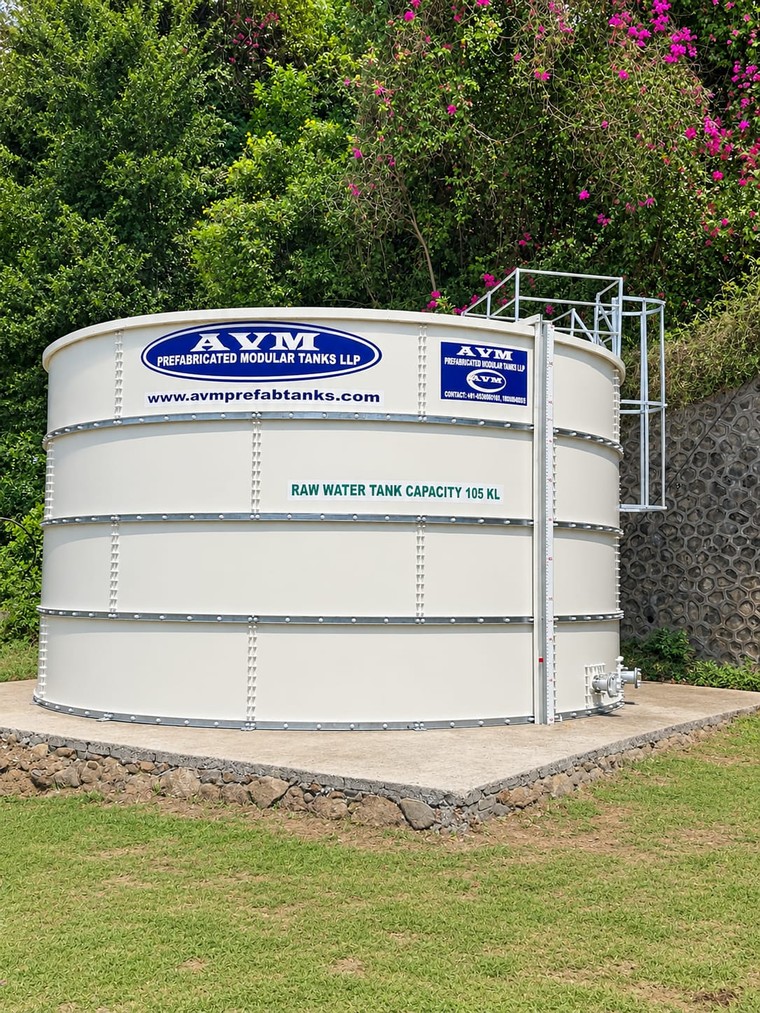
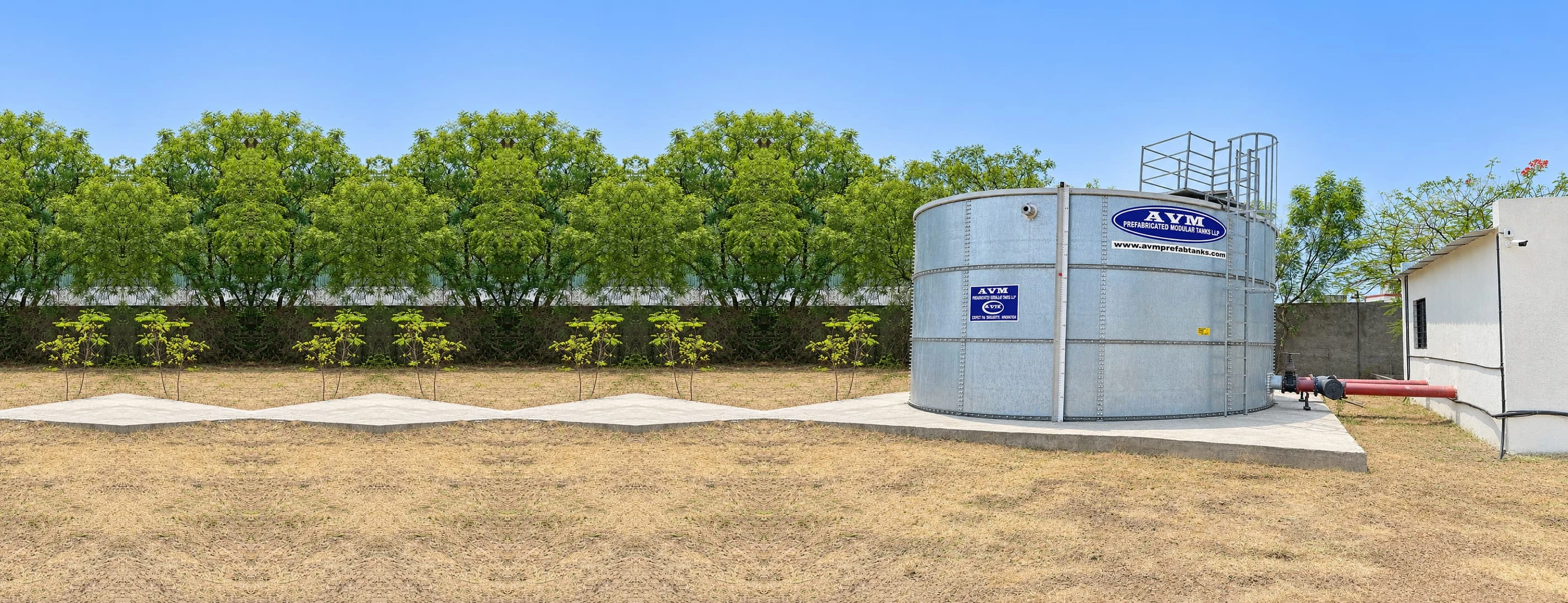
The construction of industrial storage tanks involves different materials, such as steel, concrete, reinforced polymers and engineered composite materials. Each material offers different characteristics in terms of structural strength, durability, corrosion resistance and maintenance requirements. Prefabricated modular tank systems are also used in projects where transportation, faster installation and future storage expansion are important considerations.
When evaluating suitable Industrial Water Storage Tanks, businesses generally consider the following factors:
- Storage Capacity: The total volume of water required for daily operations, emergency reserves and future demand.
- Water Characteristics: The quality, temperature and intended use of the stored water.
- Environmental Conditions: Exposure to sunlight, rainfall, humidity, temperature variations and other external factors.
- Installation Space: Available land area, site accessibility and above-ground or underground installation requirements.
- Structural Requirements: Foundation design, load-bearing capacity and overall tank stability.
- Expected Service Life: Material durability and suitability for long-term industrial use.
- Inspection and Maintenance: Accessibility for routine checks, cleaning, repairs and preventive maintenance.
A suitable storage arrangement helps facilities manage water requirements more efficiently while supporting uninterrupted operations. Choosing the right tank configuration, construction material and capacity also contributes to the long-term performance and reliability of the overall storage infrastructure.
Large Industrial Water Tanks: Capacity and Infrastructure Planning
Large Industrial Water Tanks are essential for facilities with high water consumption, continuous production cycles, or the need to maintain reserve water supplies during interruptions. Capacity planning involves understanding daily consumption, peak demand, production schedules, emergency requirements, and the availability of incoming water supply. A well-planned storage system helps industries maintain water availability without unnecessarily increasing storage capacity or operational costs.
Infrastructure planning for large-capacity tanks requires evaluating tank dimensions, site footprint, foundation conditions, structural loads, pumping capacity, distribution pressure, water treatment requirements, and maintenance access. The tank's height, diameter, and configuration must be determined according to site limitations and hydraulic requirements rather than storage volume alone. Proper inlet, outlet, overflow, drainage, and monitoring arrangements are equally important for managing stored water efficiently.
For facilities with changing operational demands, modular storage configurations can provide flexibility in capacity planning and system expansion. Multiple tank units may be used to create separate storage zones, support maintenance isolation, or provide operational redundancy. At AVM Prefabricated Modular Tanks LLP, large industrial storage requirements can be approached through application-based capacity planning and modular tank configurations, with the final design guided by project specifications, structural calculations, site conditions, and operational needs.
Industrial Liquid Storage Tanks and Material Compatibility
Industrial Liquid Storage Tanks are designed to store a wide range of liquids used in manufacturing, processing, and industrial operations. Although water is one of the most commonly stored materials, industrial tanks may also be required for chemicals, fuels, wastewater, and other process liquids. Each application has different storage requirements, making tank selection dependent on the nature of the liquid and the intended use.
Material compatibility plays an important role in tank design and long-term performance. Factors such as chemical concentration, operating temperature, corrosiveness, viscosity, and vapour characteristics can influence the selection of tank materials, internal coatings, seals, valves, and connection fittings. Choosing suitable materials helps reduce the risk of leakage, corrosion, material degradation, and unnecessary maintenance.
Before selecting a tank, industries should evaluate the stored liquid, operating conditions, capacity requirements, and applicable safety and environmental regulations. A properly specified storage system considers more than just tank dimensions or volume. At AVM Prefabricated Modular Tanks LLP, industrial tank requirements can be assessed according to the application, liquid properties, and project-specific storage needs to support reliable and practical storage solutions.
Industrial Water Storage Requirements at AVM Prefabricated Modular Tanks LLP
Industrial water storage projects require careful planning to ensure that the selected tank configuration meets the facility's operational and site-specific requirements. AVM Prefabricated Modular Tanks LLP operates in the prefabricated modular tank segment, offering a relevant storage approach for industrial, commercial and infrastructure applications.
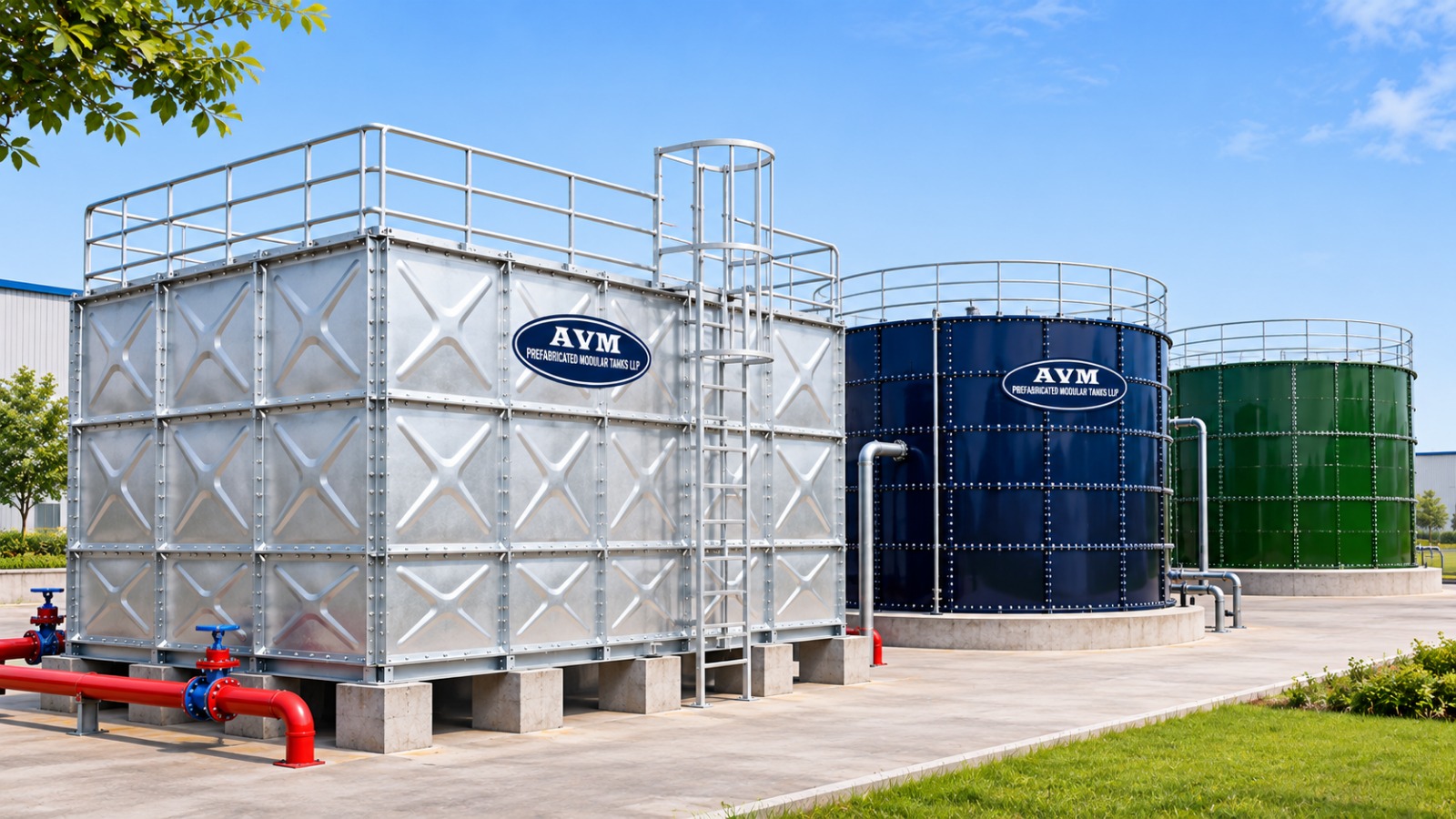
Prefabricated modular tank systems are assembled using individual structural panels according to the specified project design. This construction approach allows tank dimensions and storage capacity to be planned around the available installation area, transportation conditions and intended application.
Before finalizing a modular storage arrangement, it is important to evaluate the technical requirements of the project. These details help establish an appropriate tank configuration and identify the construction and installation considerations involved.
The following information is useful when planning an industrial water storage project:
- Intended Storage Application: Identify whether the tank will be used for industrial water supply, process requirements, utility operations or another application.
- Required Storage Capacity: Determine the volume of water needed based on consumption patterns, supply availability and operational demand.
- Water Quality: Evaluate the characteristics of the stored water to determine suitable construction materials and protective systems.
- Installation Location: Assess the available space, site accessibility and proposed above-ground or other installation arrangement.
- Foundation and Structural Requirements: Consider ground conditions, foundation design, structural loading and tank stability.
- Transportation and Assembly: Review component transportation, site access and the installation sequence.
At AVM Prefabricated Modular Tanks LLP, project requirements and site conditions are important considerations when evaluating suitable modular tank configurations. A systematic assessment of capacity, material suitability, structural design and installation requirements helps establish a storage solution aligned with the intended application.
For businesses planning industrial water storage infrastructure, understanding these technical requirements provides a useful starting point for selecting an appropriate prefabricated modular tank system.
Not sure which tank fits your site? Share your application, daily demand and site size — our engineers will size the tank and send a layout with the quote. Talk to an engineer →Industrial Tank Solutions for Different Operational Requirements
Industrial Tank Solutions are designed to meet the storage, distribution, and operational demands of different industrial facilities. A complete tank system may include more than the storage vessel itself, incorporating foundations, connecting pipelines, pumps, level monitoring equipment, access platforms, water treatment connections, and control systems. These components help ensure that the storage infrastructure works efficiently within the facility's overall operations.
The configuration of an industrial tank system depends on site conditions, required storage capacity, water supply availability, space limitations, and operational priorities. Some facilities may require single-tank installations, while others benefit from multiple tanks, modular panel-based systems, separate raw and treated water storage, or dedicated firewater storage. Pumping and distribution arrangements can also be integrated according to the facility's water demand.
Effective system planning should consider the complete storage cycle, including incoming water supply, storage, distribution, level monitoring, replenishment, and maintenance access. At AVM Prefabricated Modular Tanks LLP, industrial storage requirements can be evaluated according to project specifications and site conditions to determine a suitable tank configuration that supports current operations and potential future expansion.
Industrial water storage infrastructure is essential for maintaining a consistent water supply across manufacturing facilities, treatment plants, power generation units, commercial buildings, and other industrial operations. Selecting the right tank requires careful evaluation of storage capacity, material selection, structural design, water quality, site conditions, piping connections, maintenance access, and applicable engineering requirements. A well-planned storage system helps facilities manage water availability according to their operational demands.
Industrial Water Storage Tanks can be developed in various configurations, including prefabricated modular tanks, steel tanks, concrete tanks, plastic tanks, and underground storage systems. Each option has its own installation requirements, durability considerations, and application suitability. Large Industrial Water Tanks require particular attention to capacity planning, foundation design, structural loads, hydraulic connections, and inspection arrangements, while Industrial Liquid Storage Tanks must be selected according to the properties of the stored liquid and material compatibility.
For AVM Prefabricated Modular Tanks LLP, industrial water storage highlights the importance of application-based tank planning, modular construction, suitable capacity selection, and engineering-led system development. By considering installation, operation, maintenance, and future expansion requirements from the beginning, industries can establish dependable storage infrastructure that supports their long-term operational needs.
Maintenance Requirements for Industrial Water Storage Tanks
Regular maintenance of Industrial Water Storage Tanks is essential for preserving structural condition, maintaining water quality, and supporting dependable operation. Inspection frequency should be determined by tank material, stored water characteristics, environmental exposure, operating conditions, and manufacturer recommendations. Routine checks should include examining external surfaces for corrosion, coating damage, leakage, loose bolts, deteriorated seals, and any signs of structural wear. Inlet, outlet, overflow, drainage arrangements, level indicators, and monitoring equipment should also be inspected to identify potential issues before they affect the storage system.
Maintenance procedures may include sediment removal, tank cleaning, disinfection, water quality monitoring, and inspection of access ladders, platforms, covers, and safety provisions, depending on the intended water use. A planned maintenance schedule helps facilities manage inspection requirements, reduce unexpected disruptions, and maintain the storage system in suitable operating condition.
Factors to Consider When Selecting an Industrial Water Storage Tank
Selecting the right Industrial Water Storage Tank requires evaluating the facility's water consumption, storage duration, reserve requirements, and available supply. Industrial buyers, project engineers, consultants, and facility managers should determine the required capacity based on daily usage, peak demand, and operational priorities. Tank material and configuration should also be assessed according to water quality, corrosion resistance, structural requirements, installation location, soil conditions, and available site space.
Other important considerations include foundation design, transportation, unloading, lifting, assembly, and maintenance accessibility. The tank system should accommodate essential connections such as inlet, outlet, overflow, drain, pumping, and distribution interfaces. Depending on the application, storage may be required for raw water, treated water, potable water, cooling water, process water, or firewater, making compliance with relevant engineering standards, safety regulations, and project specifications an important part of the selection process.
A technically suitable tank should meet the facility's operational requirements without overlooking installation feasibility, maintenance needs, durability, or long-term lifecycle cost. Evaluating these factors before finalizing the design helps project teams make informed decisions, avoid unnecessary modifications, and establish a storage system that supports reliable industrial operations over its intended service life.
Frequently Asked Questions
Industrial water storage tanks provide a reliable water supply for manufacturing, cooling, equipment cleaning, and fire protection. Stainless steel tanks are often a top choice for storing potable water and treated water because they resist corrosion and are easy to clean.
For durable, high-capacity storage, facilities can choose bolted panel tanks for on-site assembly, industrial vertical water storage tanks to save floor space, or options such as Sintex industrial underground water storage tanks to keep aboveground space clear. A 30,000-liter tank is one example for facilities that need a substantial on-site water reserve.
Large industrial water tanks can be manufactured from a variety of materials depending on their intended application, capacity, and environmental conditions. The most commonly used materials include carbon steel, stainless steel, galvanized steel, fiberglass-reinforced plastic, and high-density polyethylene. Each material offers unique advantages in terms of durability, corrosion resistance, and cost-effectiveness.
Among the leading options are high-quality industrial water storage tanks, which are engineered from premium-grade materials to ensure long-term reliability and performance. These tanks are available in both bolted and welded tanks configurations, allowing users to choose the assembly method that best suits their operational and installation requirements.
A wide range of commercial and heavy-duty sectors rely on industrial tank solutions to safely store, process, and transport liquids, gases, and bulk materials. Because every sector has unique operational demands, tanks are customized to serve several primary industries, including manufacturing facilities, treatment plants, power generation units, and commercial buildings.
Industrial liquid storage tanks are constructed from a wide range of materials depending on the specific application and the type of liquid being stored. Commonly used materials include stainless steel, carbon steel, fiberglass, polyethylene, and concrete.
Among the most popular options are plastic storage tanks, which are lightweight, corrosion-resistant, and cost-effective. These are ideal for storing chemicals, water, and other non-hazardous liquids. Another widely used option is FDA-approved liquid storage tanks, which are specifically designed for storing food-grade liquids, pharmaceuticals, and other sensitive substances where safety and compliance are critical.