Fire protection systems are an essential part of safety planning for industrial facilities, commercial buildings, warehouses, manufacturing plants and infrastructure projects. These systems require a dependable water supply to control or extinguish fires during emergency situations. While fire pumps, hydrants, sprinklers and piping networks are important components, an adequate water storage arrangement is equally necessary for maintaining the required firefighting capacity.
Fire Protection Water Storage Tanks are designed to store the water needed by dedicated fire protection systems. Their capacity, construction material, configuration and installation location must be determined according to the building's fire risk, applicable safety standards, hydraulic requirements and firefighting system specifications.
Unlike conventional water storage arrangements, fire water storage systems must be planned around emergency demand. Factors such as the required flow rate, duration of water supply, pump performance, tank suction arrangements and replenishment provisions influence the overall design.
AVM Prefabricated Modular Tanks LLP operates in the prefabricated modular tank segment, where modular storage configurations are relevant to industrial and infrastructure water storage requirements. Understanding the engineering considerations behind fire water storage helps project owners, consultants and facility managers evaluate suitable tank systems.
What Are Fire Protection Water Storage Tanks?
Fire Protection Water Storage Tanks are dedicated storage structures that maintain an available water supply for firefighting equipment and fire suppression networks. They provide the necessary reserve when the regular water supply cannot independently meet the demand of an emergency fire protection system.
These tanks are commonly associated with:
- Automatic sprinkler installations
- Fire hydrant networks
- Hose reel systems
- Fire pump installations
- Water-based fire suppression systems
- Industrial firefighting arrangements
The primary purpose of these tanks is to ensure that the firefighting network can draw the required quantity of water during an emergency.
Their design must consider the operational requirements of the connected fire protection equipment. For example, a facility with an extensive sprinkler network may have different water demand requirements from a smaller commercial building equipped with hydrants and hose reels.
Therefore, tank capacity should not be selected using building size alone. It should be established through a fire protection design assessment.
Role of Fire Protection Water Storage Tanks in Emergency Preparedness
Fire safety infrastructure depends on a reliable water storage arrangement that can deliver the required supply during unexpected fire incidents. Municipal water connections may not always provide sufficient pressure, flow rate, or continuous availability to meet the demands of firefighting equipment. Fire Protection Water Storage Tanks address this requirement by maintaining a dedicated water reserve that can be accessed by the connected fire protection system. Their presence is particularly important in industrial facilities, commercial complexes, warehouses, residential developments, and other buildings where uninterrupted firefighting water availability is essential.
These storage systems support several important operational requirements, including supplying water to fire pumps, maintaining adequate reserves for hydrant networks, and supporting automatic sprinkler installations. Separate storage arrangements also allow facility managers to monitor water levels, inspect tank conditions, and manage firefighting reserves independently of general-purpose water storage. This separation helps reduce the possibility of routine water consumption affecting the designated firefighting supply. Properly planned connections between the tank, pumps, pipelines, and firefighting equipment further contribute to the reliability of the overall system.
The capacity and configuration of Fire Protection Water Storage Tanks should be established through fire protection calculations, building occupancy requirements, hazard classification, and applicable safety regulations. Factors such as required water flow, firefighting duration, pump suction arrangements, and replenishment provisions must be considered during the design stage. Regular inspection and maintenance are equally important to ensure that the designated water reserve remains available when needed. A properly engineered storage arrangement therefore forms an important part of emergency preparedness and supports the operational readiness of the facility's firefighting infrastructure.
Fire Suppression Water Storage Tanks and Their Applications
Fire Suppression Water Storage Tanks provide a dedicated water reserve for water-based firefighting systems installed across industrial, commercial, and infrastructure facilities. These tanks are designed to supply the required water volume to connected firefighting equipment, including sprinkler installations, hydrant networks, and other approved suppression arrangements. Their capacity and configuration depend on the building's occupancy, fire risk assessment, stored materials, and operational requirements.
In industrial manufacturing facilities, these tanks support fire protection arrangements for areas containing machinery, electrical installations, raw materials, and production equipment. Warehouses and logistics centres may require substantial water storage to support extensive sprinkler coverage and hydrant networks, particularly where large quantities of packaged goods and inventory are stored.
Commercial establishments such as shopping complexes, office buildings, hotels, and business parks may also require dedicated fire water storage according to building height, floor area, occupancy, and applicable fire safety provisions. Similarly, infrastructure developments, utility installations, and industrial campuses may need independent storage systems to maintain water availability for emergency firefighting operations.
The selection of a suitable tank should consider required water capacity, installation space, water availability, pumping arrangements, pipeline connections, and accessibility for inspection and maintenance. Proper integration with the firefighting infrastructure helps establish a dependable storage arrangement that supports the facility's emergency preparedness and operational requirements.
Essential Components of a Fire Pump Water Storage Tank
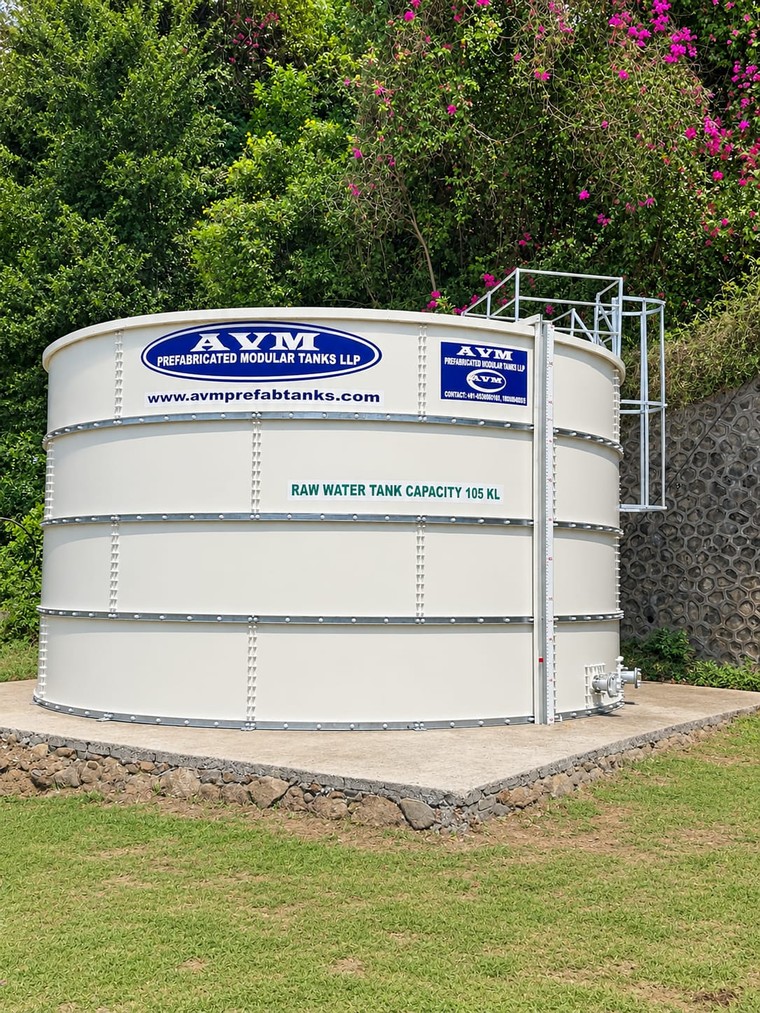
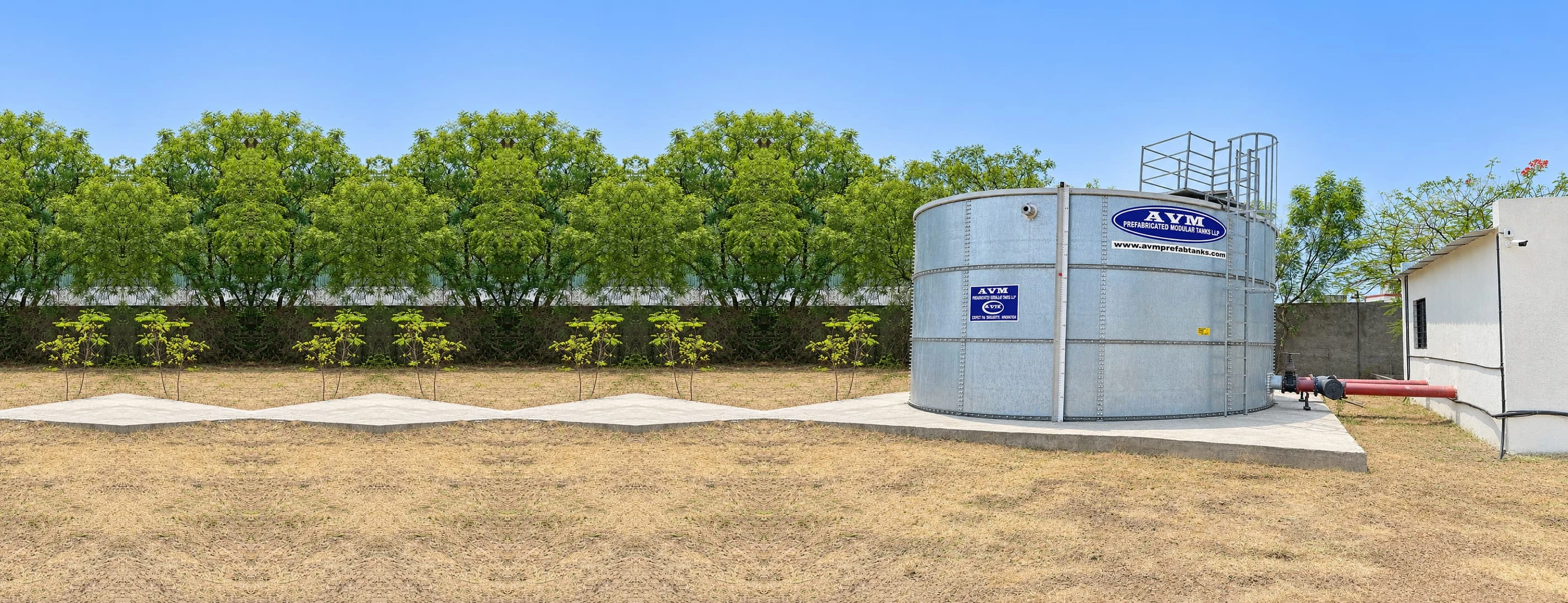
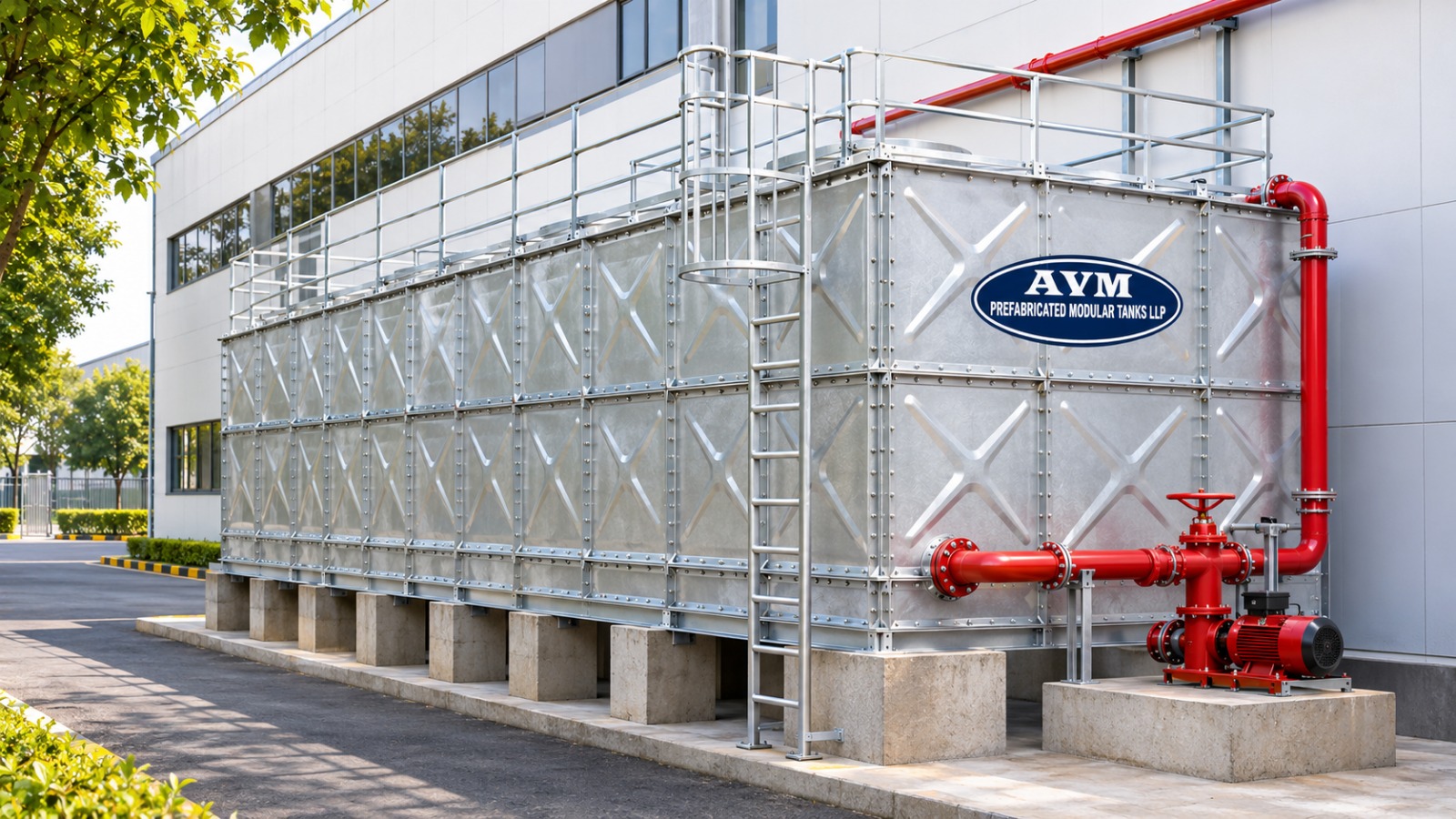
A Fire Pump Water Storage Tank requires properly designed connections and accessories to maintain a dependable water supply for connected firefighting equipment. Each component performs a specific function in controlling water entry, storage, withdrawal, and maintenance operations. The inlet connection allows water to enter the tank through the designated filling arrangement, while the outlet connection transfers stored water towards the fire pump suction system. An appropriately designed overflow arrangement prevents excess water from accumulating beyond the intended operating level, and a drain connection allows controlled water removal during cleaning, inspection, or servicing.
Water level monitoring and ventilation arrangements are also important parts of the tank configuration. A level indicator helps facility operators monitor the available water reserve and identify when replenishment may be required. The ventilation arrangement allows suitable air movement during filling and water withdrawal, while the access manhole provides an entry point for authorized personnel carrying out internal inspections and maintenance. These components should be positioned according to the tank design to ensure accessibility and practical operation.
Additional provisions such as ladders, access platforms, and dedicated suction arrangements support inspection activities and water withdrawal requirements. The suction arrangement must be coordinated with the connected fire pump specifications to maintain suitable operating conditions. All components, including their dimensions, locations, connections, and installation details, should follow approved engineering drawings and applicable fire protection requirements. Proper coordination of these accessories helps maintain the functionality, accessibility, and operational reliability of the complete fire water storage system.
Fire Protection Water Storage Tanks form an important part of dedicated firefighting infrastructure across industrial, commercial, residential and institutional facilities. Their effectiveness depends on correct capacity calculations, suitable construction materials, structural stability, properly designed connections and regular inspection.
Selecting between conventional and prefabricated modular configurations requires an evaluation of site conditions, storage requirements, installation limitations and applicable fire safety standards. Proper engineering, installation supervision and maintenance planning help maintain the availability of the designated firefighting water reserve.
AVM Prefabricated Modular Tanks LLP provides prefabricated modular tank solutions for industrial and infrastructure water storage requirements. Tank selection and configuration should be evaluated according to the intended application, project specifications and relevant technical requirements.
Not sure which tank fits your site? Share your application, daily demand and site size — our engineers will size the tank and send a layout with the quote. Talk to an engineer →Standards and Safety Guidelines for Fire Water Storage Tanks
Fire water storage systems must be designed, manufactured, and installed according to applicable fire safety regulations, structural engineering requirements, and project-specific technical specifications. These requirements help ensure that the tank structure can safely accommodate the intended water capacity while supporting the operational needs of connected firefighting equipment. The selection of relevant standards depends on factors such as building occupancy, tank construction material, installation location, and the type of fire protection system being used.
Several important standards and regulatory references may need to be considered during project planning:
- National Building Code of India (NBC): Provides guidelines for fire and life safety provisions, including fire protection infrastructure in different building categories.
- NFPA 22: Covers the design, construction, and installation requirements for private fire protection water storage tanks.
- Local Fire Department Requirements: Include applicable approvals, inspection conditions, and project-specific fire safety requirements established by the relevant authorities.
- Structural Design Standards: Relevant Indian Standards and engineering criteria help address tank strength, foundation design, load distribution, and structural stability.
The applicable compliance requirements should be evaluated before finalizing tank specifications and installation procedures. Structural calculations, material specifications, foundation details, connection arrangements, and safety provisions should be reviewed by qualified professionals. Proper documentation, inspection, and commissioning procedures are also important for establishing a storage system that meets the project's approved fire protection requirements.
Frequently Asked Questions
A fire water storage tank is a dedicated water storage vessel designed to hold reserve water exclusively for fire suppression and emergency response. Available as fire protection water tanks or fire protection water storage tanks, these systems typically range from 5,000 to 100,000-gallons to meet varying facility demands. Compliant options include nfpa 22 approved water tanks and cst fire protection water storage tanks, while modular steel bolted water storage tanks offer flexible, scalable installation. Whether classified as fire protection tanks or tanks dedicated to fire storage, tanks are a critical element in providing safe, secure water for protecting lives and property during emergencies.
There is no universal size or construction specification for fire-protection tanks. Each tank must be specified according to the required fire flow, supply duration, usable capacity, site conditions, pump suction requirements, and the standards adopted by the authority having jurisdiction (AHJ).
NFPA 22 is the standard for water tanks for private fire protection, while the required water demand is generally established through the applicable sprinkler, standpipe, and fire-pump standards and project hydraulic calculations.
A fire protection water storage tank is used to store water used by the fire sprinkler systems and other suppression equipment, ensuring a reliable water supply is available during a fire emergency. The tank is configured to support hydrant loops, sprinkler systems, fire pumps, and other critical components of a building's fire protection infrastructure.
Water storage tanks can be made of various materials, including steel, fiberglass, and plastic. For example, fiberglass tanks deliver dependable water storage for fire suppression systems, while those who want to shop high quality plastic water storage tanks suitable for fire protection can find durable, corrosion-resistant options. A popular configuration is a water storage tank with autofill 1-1/2 in inlet, which allows the tank to automatically refill from the municipal supply after a discharge event. Returning water to the tank prevents flooding and damage to surrounding structures and landscaping.
Fire protection water tanks must be properly maintained and monitored to ensure they are always prepared to deliver a reliable water supply during emergencies. This involves regular inspections, routine cleaning, corrosion monitoring, water quality testing, and ensuring that all valves, fittings, and access points are functioning correctly. A well-maintained tank can mean the difference between a minor incident and a catastrophic loss.
Among the most effective solutions available are water storage tanks for fire protection systems, which are specifically engineered to maintain optimal conditions for firefighting readiness at all times. These tanks are designed with features that allow easy access for inspection and maintenance, ensuring compliance with fire safety standards.