DM Water Storage Tank,jpegl processing, pharmaceutical production and other applications requiring controlled water purity. In these industries, ordinary water may contain dissolved minerals, salts, ions and other impurities that can interfere with equipment performance and production processes. Demineralisation is therefore used to remove dissolved ionic impurities and produce water suitable for specific industrial requirements.
A DM Water Storage Tank is an important component of industrial water management infrastructure. It is designed to store demineralised water after the treatment process and maintain an adequate supply for downstream operations. The selection of an appropriate storage tank requires careful consideration of water chemistry, material compatibility, structural strength, storage capacity and operating conditions.
Demineralised water has different chemical characteristics from untreated or ordinary water. Its low ionic content can influence the compatibility of certain construction materials, coatings, internal linings and associated fittings. Therefore, tank material selection should be based on the actual water quality and manufacturer's technical recommendations.
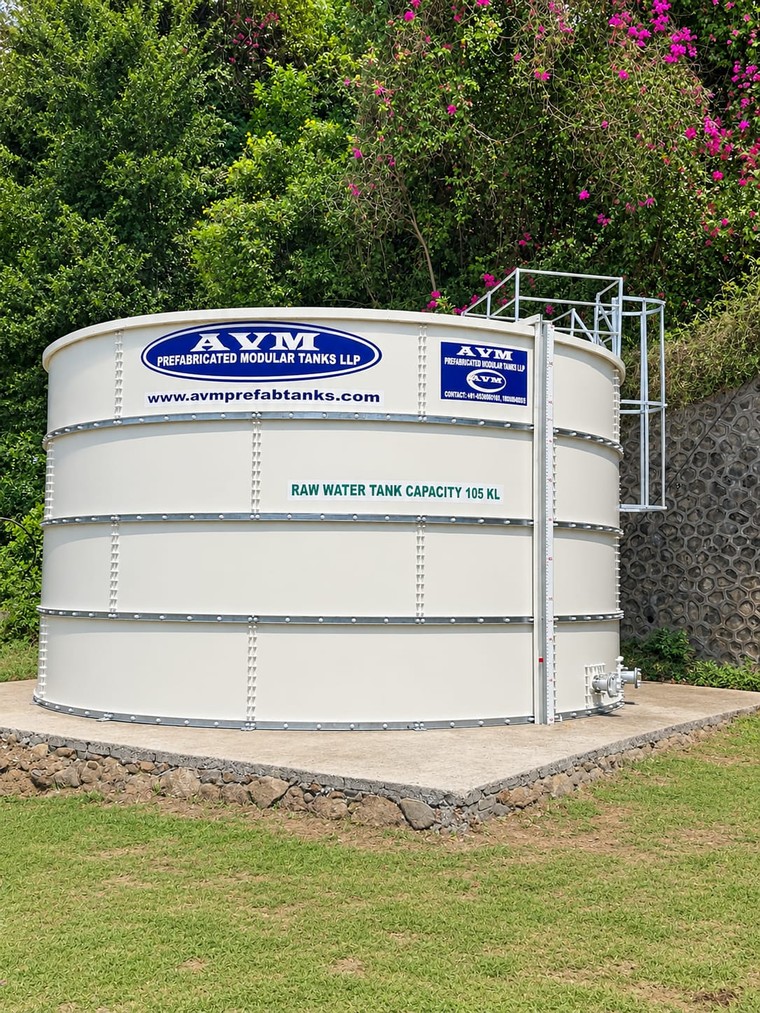
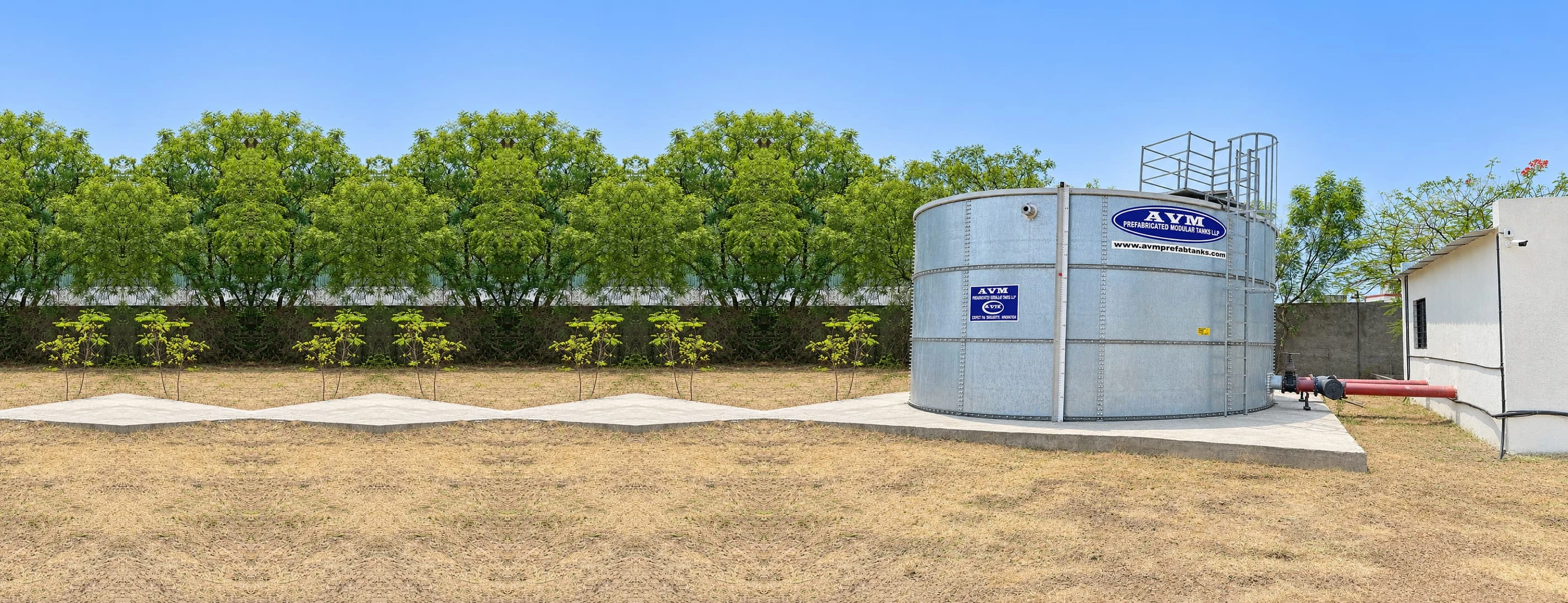
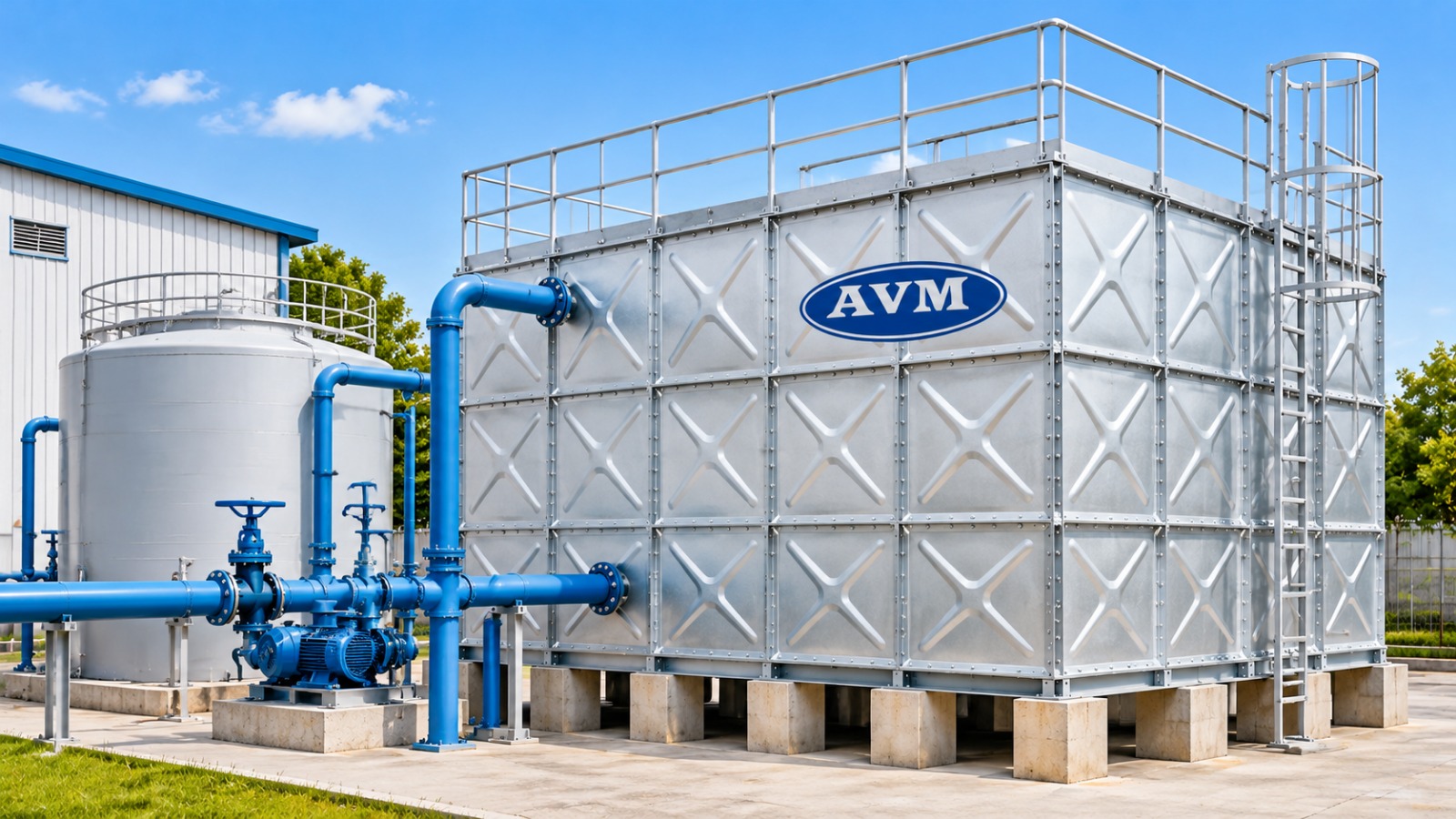
AVM Prefabricated Modular Tanks LLP operates in the prefabricated modular tank segment, where tank configuration, material specifications, structural design and installation requirements are important considerations for industrial storage projects.
This article explains DM water storage systems, their construction, material requirements, industrial applications, wastewater storage systems, installation procedures and maintenance considerations.
Why Is DM Water Storage Important in Industrial Operations?
DM water storage is important in industrial operations because many processes require a consistent supply of demineralized water to maintain production schedules and equipment performance. A dedicated storage tank provides an intermediate holding arrangement between the water treatment plant and the point of consumption. It helps maintain an available reserve when water production and industrial demand do not occur at the same rate. This arrangement reduces dependency on continuous treatment plant output and supports a more stable supply during changing operational requirements.
Demineralized water is used in applications where dissolved minerals can contribute to scaling, deposits or other operational issues. For example, it is used in boiler feedwater preparation and selected industrial processes where water quality directly affects equipment efficiency and performance. A suitable storage system helps make treated water available when required and supports the operation of equipment that depends on controlled mineral content. Storage capacity should be planned according to consumption patterns, treatment output and the required operating reserve.
Maintaining water quality during storage is another important consideration. Although demineralization removes dissolved mineral ions, the treated water can still become contaminated if the storage arrangement is not properly designed or maintained. Tank construction materials, internal surfaces, ventilation, access openings and pipeline connections should therefore be selected to minimise contamination risks. Regular inspection, appropriate cleaning procedures and controlled handling help preserve the required water quality. A properly planned DM water storage system supports treatment plant efficiency, reliable water availability and consistent industrial operations.
DM Water Tank Construction and Design Considerations
The construction of a DM Water Tank requires careful planning based on storage capacity, water chemistry, operating conditions and installation requirements. Material selection is particularly important because demineralized water may interact differently with construction materials compared with ordinary water. Depending on the application, stainless steel, approved lined carbon steel, specialised coated steel or other technically compatible materials may be considered. The selected material should be evaluated for corrosion resistance, chemical compatibility and its potential to affect stored water quality. For steel tanks, internal coatings or protective linings should be suitable for continuous contact with the intended water. Their chemical compatibility, immersion resistance, adhesion, curing conditions, temperature limitations and potential for leaching should be reviewed before finalising the specification.
Storage capacity and structural design must also match the facility's actual operating requirements. Capacity calculations should consider daily DM water consumption, treatment plant output, operating hours and the required reserve duration. Minimum operating levels, unusable volume, emergency requirements and variations in demand should be included in the final estimate. Structural engineering should account for tank diameter and height, panel thickness, material grade, hydrostatic pressure, wind and seismic loads, roof and accessory loads, and foundation conditions. Inlet and outlet connections should be positioned according to the treatment and distribution system, while suitable ventilation should allow air movement during filling and emptying. Where strict water purity is required, filtered vents and additional contamination-control arrangements may be incorporated into the design. These considerations help create a storage system that supports the required water quality, structural stability and dependable industrial operation.
What Is a DM Water Storage Tank?
A DM Water Storage Tank is an industrial storage vessel designed to store demineralized water after it has undergone a purification process. Demineralization removes dissolved mineral ions such as calcium, magnesium, sodium, chloride and sulphate to achieve the water quality required for specific industrial operations. This type of water is commonly used in applications where controlling mineral content is important for equipment performance and process requirements.
Demineralized water is generally produced through ion-exchange systems, reverse osmosis combined with additional purification stages, or other suitable treatment technologies. After treatment, the purified water is transferred to a dedicated storage tank before being supplied to the required application. The tank acts as an intermediate storage point between the treatment plant and the consumption area, helping maintain an available water reserve and regulate supply according to operational demand. It can also reduce the need for continuous operation of upstream treatment equipment.
The selection and design of a DM water storage system should focus on maintaining the required water purity and preventing unwanted contamination during storage.
Understanding Waste Water Storage Tank Systems
A Waste Water Storage Tank is an industrial or commercial storage structure designed to collect and temporarily hold wastewater before it is transferred for treatment, reuse or safe disposal. Wastewater can originate from manufacturing processes, equipment cleaning, chemical processing, domestic activities, commercial facilities and routine utility operations. Unlike raw water or DM water, it may contain suspended solids, dissolved chemicals, organic substances, oils and other impurities. Therefore, the tank must be designed according to the wastewater's composition, expected flow rate and intended handling process.
Material selection and structural protection are important considerations because wastewater characteristics can vary significantly between applications. The tank construction should provide suitable resistance to the chemicals and substances present in the stored liquid. Protective coatings, compatible lining systems and properly sealed joints can help reduce corrosion and leakage risks. The design should also include appropriate inlet, outlet and drainage connections, along with provisions for sediment removal and sludge accumulation. Where wastewater may release gases or unpleasant odours, suitable ventilation and safety arrangements should be incorporated according to the application requirements.
Storage capacity should be determined by assessing the wastewater generation rate, treatment plant capacity, peak discharge volumes and the required holding period. Regular inspection and cleaning provisions are also necessary to manage accumulated solids and maintain the tank's operating condition. Access openings should allow maintenance personnel to inspect internal surfaces, connections and other components safely.
Design Considerations for Industrial DM Water Tanks
Designing an industrial DM water tank requires a combined assessment of storage capacity, structural stability, water quality and operating conditions. Capacity should be determined by considering daily water consumption, treatment plant output, peak demand and the required reserve period. An undersized tank may interrupt the supply during high-demand periods, while excessive storage capacity can increase water retention time and create additional water-quality management requirements. Structural calculations should account for tank dimensions, hydrostatic pressure, material properties, support arrangements, foundation conditions and applicable site-specific loads. Inlet and outlet connections must be positioned to support smooth water transfer, effective drainage and minimal stagnant zones. For atmospheric storage tanks, suitable ventilation and overflow arrangements are also necessary to manage air movement and excess water safely.
Operational monitoring and maintenance provisions should be included during the design stage to support reliable performance. Level indicators, high-level alarms and low-level monitoring devices help operators maintain appropriate storage levels and prevent unexpected overflow or supply shortages. Manholes, inspection openings and suitable access arrangements should be provided wherever required for internal inspection and cleaning.
Industrial Applications of DM Water Storage Tanks
Industrial DM water storage tanks are used in facilities where controlled mineral content is important for production processes, equipment performance and utility operations. Power generation plants use demineralized water in boiler feedwater preparation and steam-cycle applications, where mineral deposits can affect equipment efficiency. Pharmaceutical manufacturing facilities may require treated water for specific production and utility activities, with storage arrangements selected according to the required water-quality and hygiene standards. Chemical processing industries also use DM water for product preparation, dilution, equipment washing and selected manufacturing operations, depending on process specifications.
Textile and dyeing industries may use demineralized water for dye preparation, rinsing, washing and other activities where mineral content can influence processing consistency and finished product quality. Food and beverage facilities may require controlled-quality water for selected production processes, cleaning and utility applications, making material compatibility and applicable hygiene requirements important during tank selection.
A DM Water Storage Tank is an important component of industrial water management infrastructure, providing storage for demineralized water before it is supplied to downstream applications. Its design requires careful consideration of water purity, material compatibility, internal protective systems, structural strength and operating conditions.
Similarly, Waste Water Storage Tanks and Waste Water Treatment Tanks serve different functions within wastewater management infrastructure. Their design must account for wastewater composition, solids handling, treatment requirements and corrosion resistance.
Understanding these differences helps engineering teams select appropriate storage configurations for industrial water systems. For AVM Prefabricated Modular Tanks LLP, material selection, modular construction, structural design and installation planning are important considerations when evaluating prefabricated storage tank requirements.
The suitability of any storage system should ultimately be established through water quality analysis, engineering calculations, manufacturer recommendations and applicable technical standards.
Waste Water Storage Tank: Purpose and Industrial Requirements
A Waste Water Storage Tank is designed to collect and temporarily store wastewater generated through industrial processes, manufacturing activities, equipment cleaning and utility operations. Depending on the facility and production methods, wastewater may contain suspended solids, dissolved chemicals, oils, organic matter and other process-related contaminants. Since its composition can vary considerably between industries, the storage system must be designed according to the characteristics of the incoming wastewater. It acts as an intermediate collection point, helping regulate wastewater flow before it is transferred to treatment facilities, recycling systems or approved disposal arrangements.
Several technical requirements should be evaluated before selecting a suitable wastewater storage tank. Construction materials must be compatible with the wastewater's chemical composition, pH, temperature and corrosive properties. Storage capacity should accommodate normal generation rates, peak wastewater flow and the required retention or equalisation period. Structural strength, properly sealed joints and suitable inspection arrangements help minimise leakage risks. The design should also include appropriate bottom drainage and cleaning provisions to manage sediment and sludge accumulation. Level indicators and alarms can support controlled filling and transfer operations, while ventilation arrangements should be selected according to the potential presence of gases, odours and other workplace hazards.
Industrial wastewater storage systems are commonly used in manufacturing plants, chemical processing units, textile facilities, engineering industries and other establishments where wastewater requires controlled collection before treatment. Each application may have different requirements depending on production volume, wastewater characteristics and the treatment process involved. Regular inspection, sediment removal and maintenance of structural connections are important for keeping the tank in suitable operating condition. A properly specified storage arrangement helps manage wastewater flow, supports downstream treatment operations and reduces the risk of uncontrolled discharge into the surrounding environment.
Industrial Water Storage Solutions by AVM Prefabricated Modular Tanks LLP
AVM Prefabricated Modular Tanks LLP operates in the industrial prefabricated and modular tank sector, offering storage solutions for projects that require carefully planned tank configurations. Industrial water storage involves more than selecting the required capacity; it also requires an assessment of structural design, construction materials, installation conditions and the characteristics of the stored liquid. Whether the application involves a DM Water Storage Tank, DM Water Tank, Waste Water Storage Tank or Waste Water Treatment Tank, the system specifications should be determined according to the intended purpose and operational requirements.
Before finalising a tank configuration, project teams should evaluate the type of water or liquid being stored, required capacity, tank dimensions and suitable construction materials. Internal surface compatibility, foundation conditions, installation space and site accessibility also play an important role in the planning process. Inlet, outlet, overflow and drainage connections should be positioned according to the proposed water transfer arrangement, while inspection openings and maintenance provisions should be considered to support long-term operation.
A properly planned industrial tank system should meet the project's storage requirements while allowing convenient installation, inspection and maintenance. AVM Prefabricated Modular Tanks LLP focuses on the technical considerations involved in prefabricated and modular tank applications, helping project planners assess suitable configurations based on their site conditions and intended use. Final tank specifications should be established through project-specific engineering evaluation to ensure that the selected storage arrangement is appropriate for the required capacity, liquid characteristics and operating environment.
Not sure which tank fits your site? Share your application, daily demand and site size — our engineers will size the tank and send a layout with the quote. Talk to an engineer →Frequently Asked Questions
DM (demineralized) water has essentially zero hardness, typically 0 ppm as CaCO₃. Hardness is caused by dissolved calcium (Ca²⁺) and magnesium (Mg²⁺) ions, which are removed during demineralization by ion-exchange resins or reverse osmosis followed by polishing.
A Waste Water Storage Tank in a wastewater treatment plant provides controlled holding, flow equalization, and process support—helping contain incoming or partially treated wastewater, manage surges, and support treatment steps such as settling, aeration, or chemical dosing. In short, wastewater tanks are a primary tool for city managers because wastewater storage tanks are designed to contain, manage, or treat water contamination safely and reliably.
Plants may use FRP and steel industrial water and wastewater storage tanks for large permanent capacity, portable waste water tanks with heavy-duty wheels and handles for temporary or maintenance applications, and plastic storage tanks for smaller or corrosion-sensitive duties. Because we fabricate tanks to your exact size, shape, and capacity requirements, facilities can match treatment and storage needs precisely, while easy cleaning and long lifespans help reduce maintenance and support dependable operation.
The best system depends on the property, local regulations, soil conditions, and whether the treated water will be discharged or reused. For most homes with suitable soil, a septic system is a practical choice. Where space is limited or a higher level of treatment is required, a residential treatment plant may be better.
DM water means demineralized water: water treated to remove most dissolved mineral ions, such as calcium, magnesium, sodium, chloride, and sulfate. It is commonly produced using ion exchange or other purification processes.
DM water is used in boilers, laboratories, pharmaceutical manufacturing, and industrial processes where mineral deposits could cause problems. It is not necessarily sterile or suitable for drinking without further treatment.
A dm water tank, also called a demineralized water tank or dm water storage tank, is used to store and provide demineralized water while limiting contamination. These tanks are designed to store high-quality water free from any minerals, although complete mineral removal cannot always be guaranteed.
Options range from smaller vessels to huge sized dm water storage tanks. Materials and finishes are selected to protect water purity; for example, corrosion-resistant demin water tank systems may use suitable stainless steel or plastic. Some applications require a high degree finishing and electric polishing done in the filling vessel, but the finish depends on the required water quality and process standards.