Water storage infrastructure is an essential requirement for commercial buildings, business establishments, institutional facilities and agricultural operations. Consistent water availability is necessary for sanitation, cleaning, landscaping, cooling systems, food preparation, irrigation and other daily activities. An appropriately designed storage system helps manage variations in water supply and maintain sufficient water availability according to operational demand.
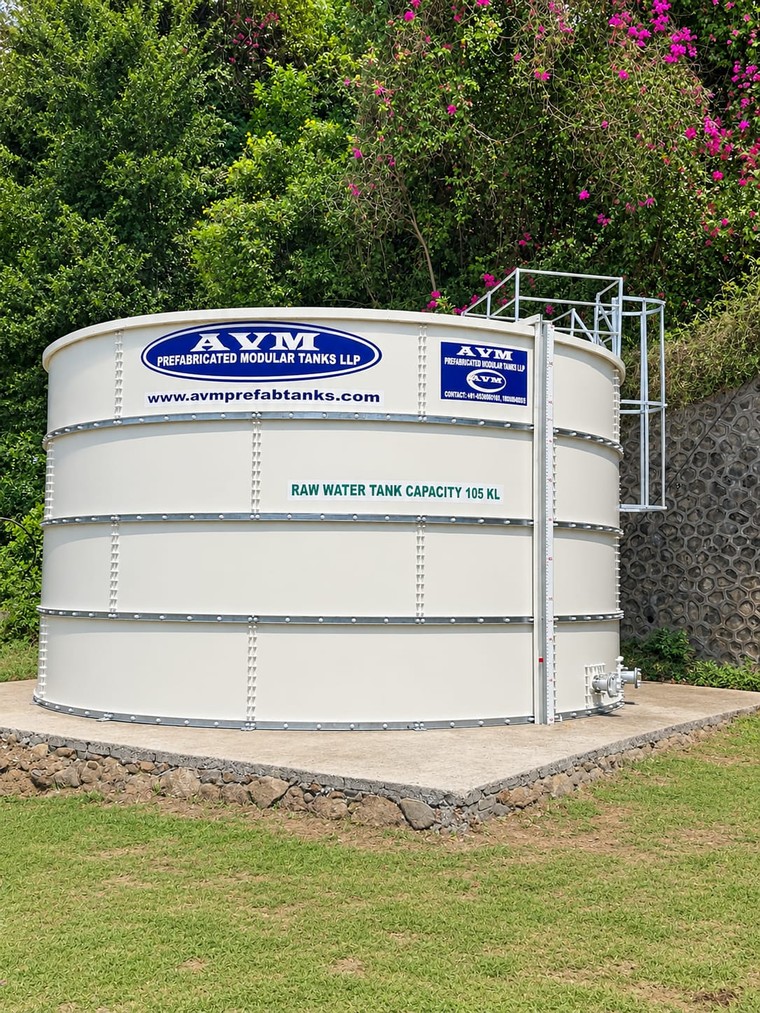
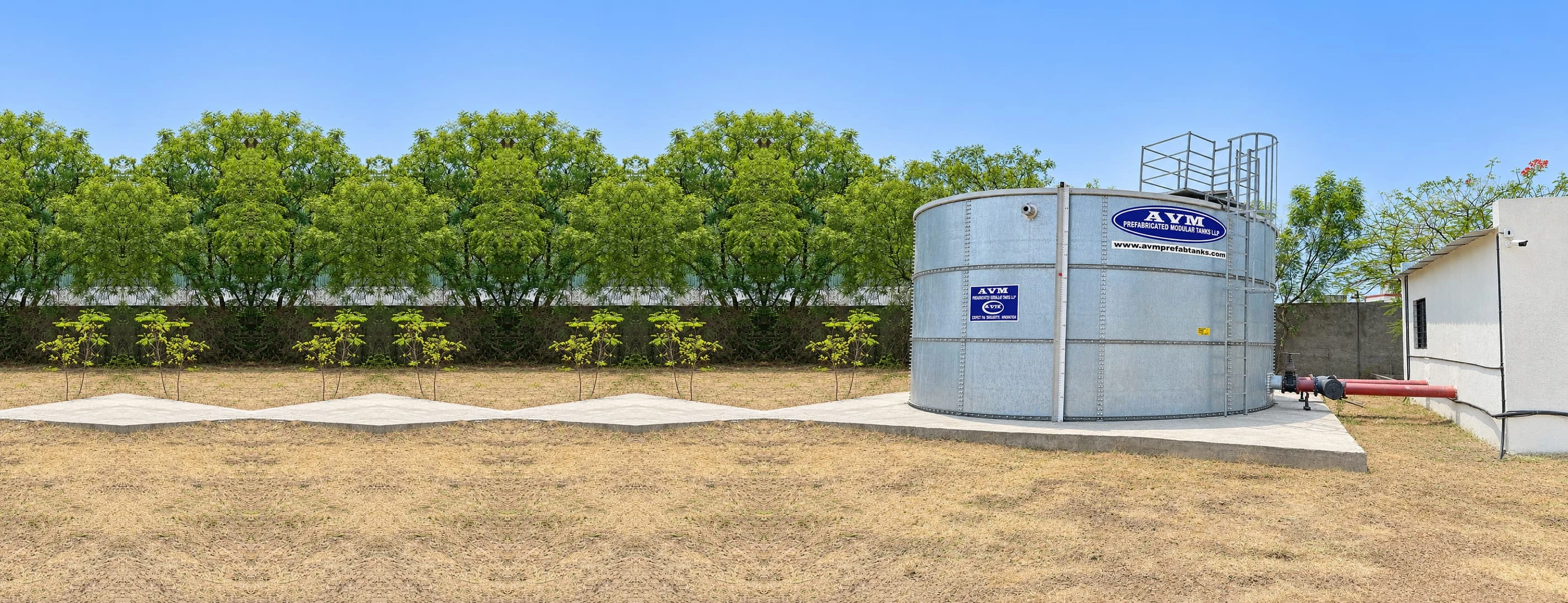
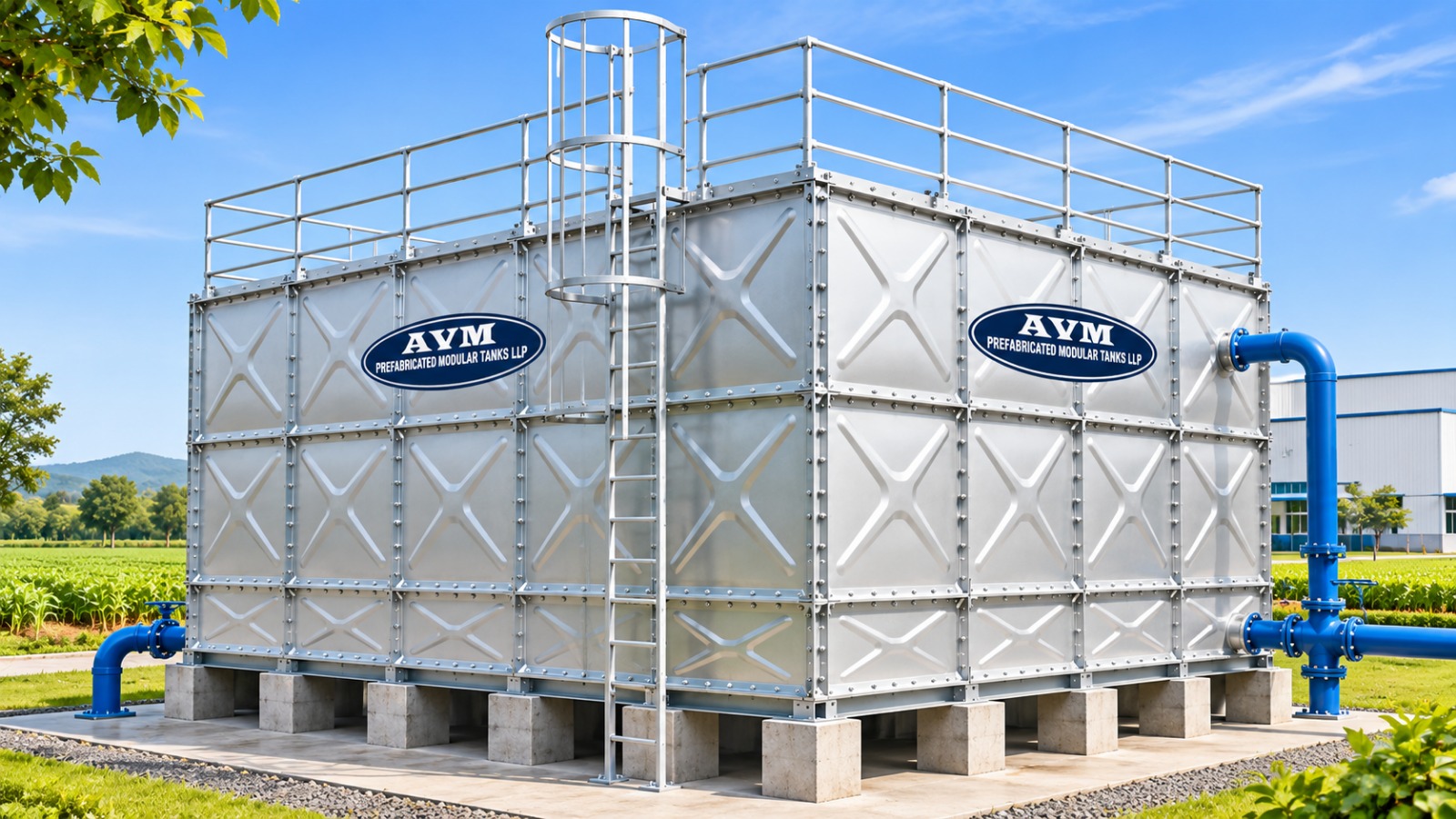
Commercial Water Storage Tanks are engineered storage structures designed to hold water for use in commercial and institutional applications. These systems are available in different materials, capacities and construction configurations depending on the installation environment, water consumption requirements and structural specifications.
Commercial water storage requirements differ from residential applications because larger facilities may have higher consumption rates, multiple distribution points and additional operational demands. Therefore, tank selection involves evaluating storage capacity, material compatibility, structural loading, installation space, water quality and maintenance requirements.
AVM Prefabricated Modular Tanks LLP operates in the prefabricated modular tank segment, where tank configuration, material specifications and installation planning are important considerations for water storage infrastructure.
This article explains the types, construction methods, design considerations, applications, installation procedures and maintenance requirements of commercial water storage systems.
Commercial Applications of Water Storage Tanks
Commercial water storage systems are used in shopping centres, office buildings and large commercial complexes where water is required for washrooms, housekeeping, cleaning, landscaping and general utility operations. Commercial Storage Tanks provide a centralised arrangement for maintaining an adequate water reserve and distributing it across different sections of a property. Their capacity is generally determined by the building's occupancy, daily consumption, peak usage and availability of the external water supply. Properly planned storage also helps commercial facilities manage fluctuations in water demand.
Hotels and hospitality establishments require a consistent water supply for guest rooms, kitchens, laundry facilities, sanitation and housekeeping activities. Storage capacity should be assessed according to room occupancy, guest numbers, staff strength and seasonal demand variations. Hospitals and healthcare institutions have additional requirements because water is essential for sanitation, cleaning, general utilities and other critical activities. Their storage arrangements should consider the number of beds, healthcare operations, staff and visitors, along with applicable emergency water requirements. Regular inspection and appropriate water quality management are particularly important in these environments.
Educational institutions such as schools, colleges and training centres also depend on storage systems to support daily water requirements. Water is used in washrooms, laboratories, cleaning activities, drinking water arrangements and general campus maintenance. The required tank capacity depends on student strength, staff numbers, operating hours and the reliability of the incoming water supply. For larger campuses, multiple storage tanks or separate compartments may be considered to support different usage requirements and simplify maintenance activities.
Installation Requirements for Commercial Water Storage Tanks
The installation of Commercial Water Storage Tanks begins with a detailed site assessment to evaluate available space, ground conditions, transportation access, drainage and nearby infrastructure. Based on the tank dimensions and total operating weight, a suitable foundation should be prepared according to the approved engineering specifications. The supporting surface must provide adequate stability and distribute the tank load safely. Before assembly, all panels, structural supports, fasteners, sealing materials and other components should be inspected to confirm that they meet the project specifications. For prefabricated modular systems, individual panels must be assembled according to the manufacturer's recommended installation procedure, with proper alignment, fastening and joint sealing to maintain structural stability and minimise leakage risks.
After completing the tank assembly, inlet, outlet, overflow and drainage connections should be installed according to the approved layout. Inspection openings, access arrangements, level indicators and other accessories may also be incorporated depending on the intended application. Once installation is complete, the entire structure should be examined for alignment, connection integrity, joint sealing and visible defects. Water-filling and leakage tests should then be carried out according to the manufacturer's recommendations and project requirements. The foundation, structural connections and pipeline interfaces should be monitored during testing, and any identified issues must be corrected before the tank is placed into regular operation.
Commercial Storage Tanks for Different Building Requirements
Commercial Storage Tanks are designed to support the water requirements of different buildings, with capacity and configuration depending on occupancy, daily consumption and operating schedules. Office buildings require water for washrooms, drinking facilities, pantry operations, cleaning and general maintenance. Their storage capacity should be planned according to employee strength, working hours and expected daily usage. Shopping malls and retail complexes generally experience fluctuating water demand based on visitor numbers, tenant occupancy, restaurants and sanitation facilities. Their storage arrangements should account for peak usage periods and the requirements of different operational zones.
Hotels and hospitality facilities require water for guest rooms, kitchens, laundry operations, housekeeping, swimming pools and other services. Capacity planning should consider room occupancy, seasonal variations and daily consumption patterns. Hospitals and healthcare facilities have more continuous water requirements for sanitation, patient care, cleaning, laundry and essential utility operations. Their storage systems should be planned with appropriate attention to water quality, operational reliability and applicable healthcare infrastructure requirements. Regular inspection and maintenance are also important to support dependable water availability.
Commercial Water Tank Capacity Calculation
Determining the correct capacity of a commercial water storage tank is essential for maintaining an adequate water supply throughout the building's operating hours. Capacity planning should begin with an assessment of daily water consumption, building occupancy and the frequency of incoming water supply. An undersized tank may create shortages during periods of high demand, whereas an oversized system can increase installation costs and water retention time. A preliminary estimate can be calculated using the following formula:
For example, consider a commercial building with an estimated daily water requirement of 30,000 litres and a planned storage duration of two days. The preliminary calculation would be 30,000 × 2, resulting in a required storage capacity of 60,000 litres. This estimate provides an initial basis for tank selection, but the final design should also account for peak consumption, supply frequency, replenishment rate, emergency reserves, minimum operating levels and unusable tank volume.
For commercial buildings in India, storage planning should also consider applicable provisions of the National Building Code and relevant local water supply regulations. Water quality, turnover requirements and the intended use of stored water should be evaluated before finalising the tank dimensions and configuration. For larger facilities, multiple tanks or separate compartments may be considered to support different building requirements and allow maintenance without completely interrupting the water supply. A project-specific assessment helps determine a practical storage capacity that balances operational demand, available space and installation requirements.
Important Design Considerations for Commercial Water Storage Tanks
The design of Commercial Water Storage Tanks requires careful evaluation of structural strength, foundation conditions and expected operating loads. Structural calculations should consider the weight of stored water, hydrostatic pressure, panel thickness, tank dimensions, wind forces, seismic conditions and roof loads wherever applicable. The foundation must be capable of supporting the complete operating weight of the tank without excessive settlement or structural movement. Soil-bearing capacity, foundation dimensions, surface level, drainage arrangements and site conditions should therefore be assessed before installation. These engineering checks help establish a stable supporting structure and reduce the possibility of installation-related problems.
Water quality compatibility and installation space are equally important during tank selection. The characteristics of the stored water, including pH, dissolved salts, chloride concentration, temperature and other relevant chemical properties, can influence the choice of construction materials and internal protective coatings. For drinking water applications, all materials that come into contact with water should comply with applicable potable water safety requirements. The selected location should provide sufficient space for the tank, foundation, pipeline connections and maintenance activities. Transportation access and the availability of suitable assembly equipment should also be considered, particularly for prefabricated modular tank installations.
Agricultural Storage Tanks and Their Applications
Agricultural Storage Tanks provide a reliable arrangement for storing water required for irrigation, livestock management, greenhouse operations and other farming activities. Water availability in agricultural areas often depends on rainfall, groundwater levels, seasonal conditions and irrigation schedules. Storage systems help farmers maintain an available water reserve and manage variations in supply throughout different stages of cultivation. The required tank capacity depends on the size of the agricultural land, crop water requirements, irrigation frequency and the availability of water sources.
Irrigation and livestock operations are two major applications of agricultural water storage. Tanks can supply water to drip irrigation, sprinkler systems and other agricultural distribution networks according to crop requirements. Dairy farms, poultry facilities and livestock units also require stored water for animal drinking, cleaning and routine management activities. In greenhouse environments, storage systems support crop irrigation, humidity management and cleaning operations. Tank material and water quality arrangements should be selected according to the intended application to maintain suitable storage conditions.
Agricultural storage tanks are also useful in food processing, crop washing, cleaning and other farm-related activities where a dedicated water reserve is required. They can be connected to rainwater harvesting systems to collect and store rainfall for suitable agricultural applications. However, harvested water may require filtration, sediment removal and quality assessment before use, depending on the intended purpose. Planning the tank capacity, material, inlet and outlet arrangements and maintenance requirements according to actual farming needs helps support efficient water management throughout the agricultural operation.
Water Distribution and Management in Commercial Facilities
An efficient commercial water storage system should be properly connected to the building's water distribution network. Key components may include transfer pumps, distribution pumps, pipelines, control valves, level sensors, flow meters and pressure monitoring equipment. Automatic level control systems help regulate tank filling and reduce unnecessary overflow, while monitoring devices allow facility managers to track consumption and identify unusual water usage patterns.
For large commercial developments, separate tanks or storage compartments may be considered to support maintenance activities without interrupting the entire water supply. Commercial Water Storage Tanks are widely used in offices, shopping complexes, hotels, hospitals and educational institutions. Their selection should consider daily water demand, storage capacity, material compatibility, structural loading, installation conditions and maintenance requirements.
Understanding the requirements of Commercial Storage Tanks, Commercial Water Tank systems and Agricultural Storage Tanks helps project planners select suitable configurations for different applications. AVM Prefabricated Modular Tanks LLP considers these technical requirements when evaluating prefabricated modular tank applications for commercial, agricultural and infrastructure projects. Final specifications should be established according to project requirements, water quality and applicable engineering standards.
Not sure which tank fits your site? Share your application, daily demand and site size — our engineers will size the tank and send a layout with the quote. Talk to an engineer →Safety and Regulatory Considerations
Commercial water storage systems should be planned with proper attention to structural stability, water quality and applicable safety requirements. Tank design must consider hydrostatic pressure, environmental loads, foundation conditions and the intended storage capacity. Materials used for drinking water storage should also meet relevant potable water quality requirements to maintain water safety.
Safe access is another important aspect of tank installation and maintenance. Ladders, platforms, roof access points and inspection openings should include suitable safety provisions. Overflow outlets must be positioned and connected to prevent waterlogging, flooding or contamination. Where fire protection water storage is required, its capacity and configuration should be assessed separately based on applicable fire safety standards and the approved fire protection system design.
Proper documentation supports safe operation and long-term maintenance of commercial water storage systems. Depending on project requirements, records may include material certificates, engineering drawings, installation details, inspection reports and maintenance logs. Following relevant regulations and carrying out periodic inspections helps facility managers identify potential issues and maintain the reliability of the storage system.
Frequently Asked Questions
Commercial storage systems include both bolted and welded tanks and are available in welded steel, corrugated bolted steel, fiberglass, and poly construction. These materials serve different needs, so selection should account for water quality, pressure, installation conditions, and maintenance.
For larger projects, Pioneer water tanks offer a heavy-duty configurable water storage solution. Smaller applications may use vertical sizes 80 to 200 gallons, while larger facilities often require substantially greater capacity. Properly configured systems can be ideal for rainwater collection and harvesting.
For drinking-water applications, choose models specifically designed for storing potable water and verify the required certifications. Product suitability, pressure ratings, current availability, and local code compliance should always be confirmed before purchase.
When it comes to maximum durability and lifespan, steel water tanks are the most durable option on the market, often lasting 30 to 50+ years.
Whether you are looking for a standard residential setup or a large-capacity containment vessel engineered to store water, the longevity of the tank depends entirely on the material it is made from. Today, water storage tanks are available in welded steel, corrugated bolted steel, fiberglass, and poly construction.
there is no single “best” type—match the tank to your use, volume, climate, water quality, and budget. For most general farm/irrigation needs, plastic storage tanks are usually the best all-around value. For large-volume, long-life, potable/food-grade, high-temperature, or heavy-duty needs, high-performance stainless steel agricultural water storage tanks or steel tanks for agriculture are often better. For portable or multi-site use, durable agricultural tanks for storage & transport are the best fit.
Maintaining commercial storage tanks is essential to ensure their long-term performance, structural integrity, and safety. Regular maintenance helps prevent leaks, corrosion, sediment buildup, and other issues that can compromise the quality and reliability of stored water. Proper upkeep also extends the lifespan of the tank and reduces the likelihood of costly repairs or premature replacements.